All radar missions & instruments
Work across mission concepts, flight instruments, DEM products, antenna patterns, and radar parameter sets without rebuilding the workflow for each case.
Radar simulation and visualisation
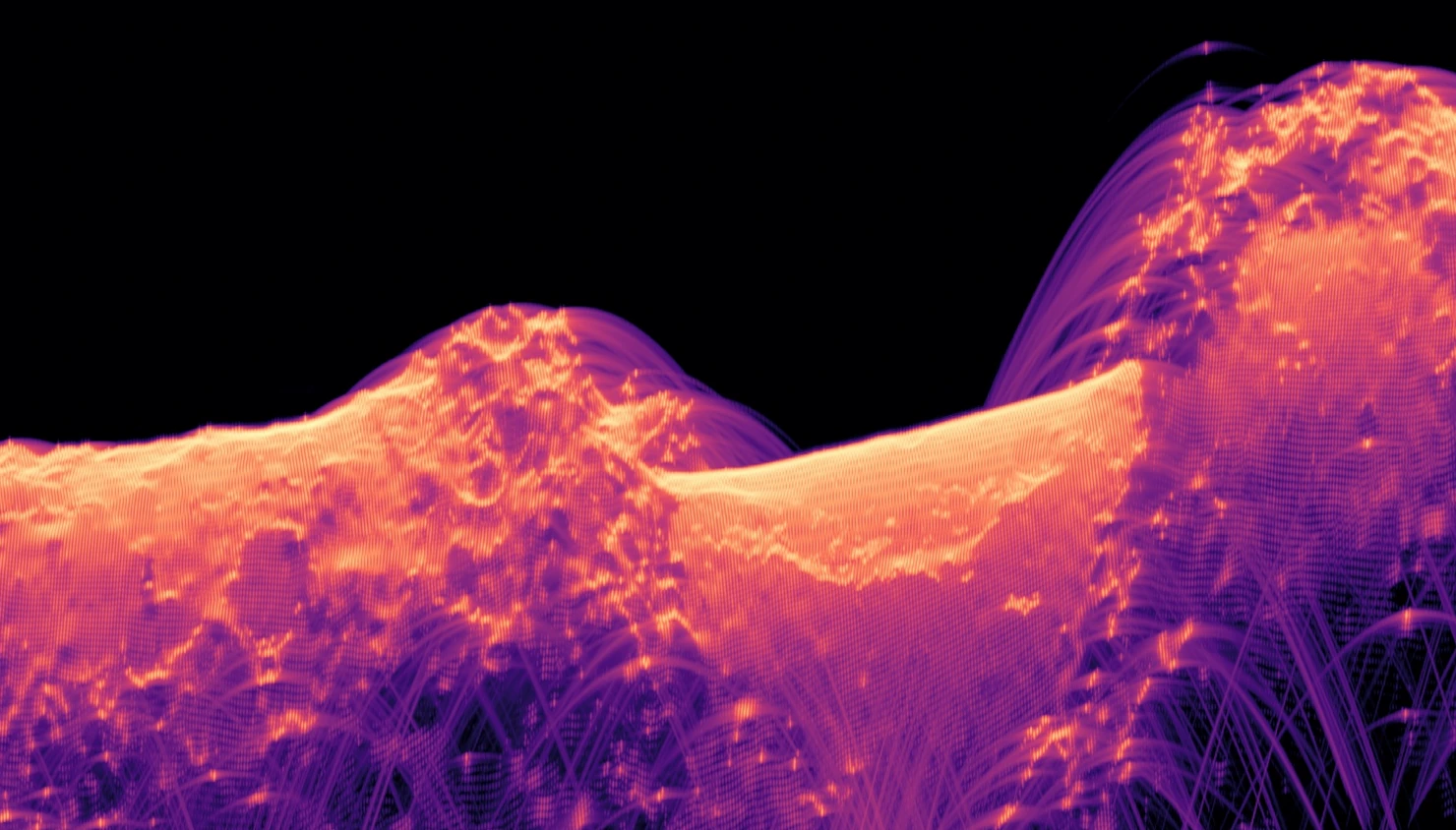
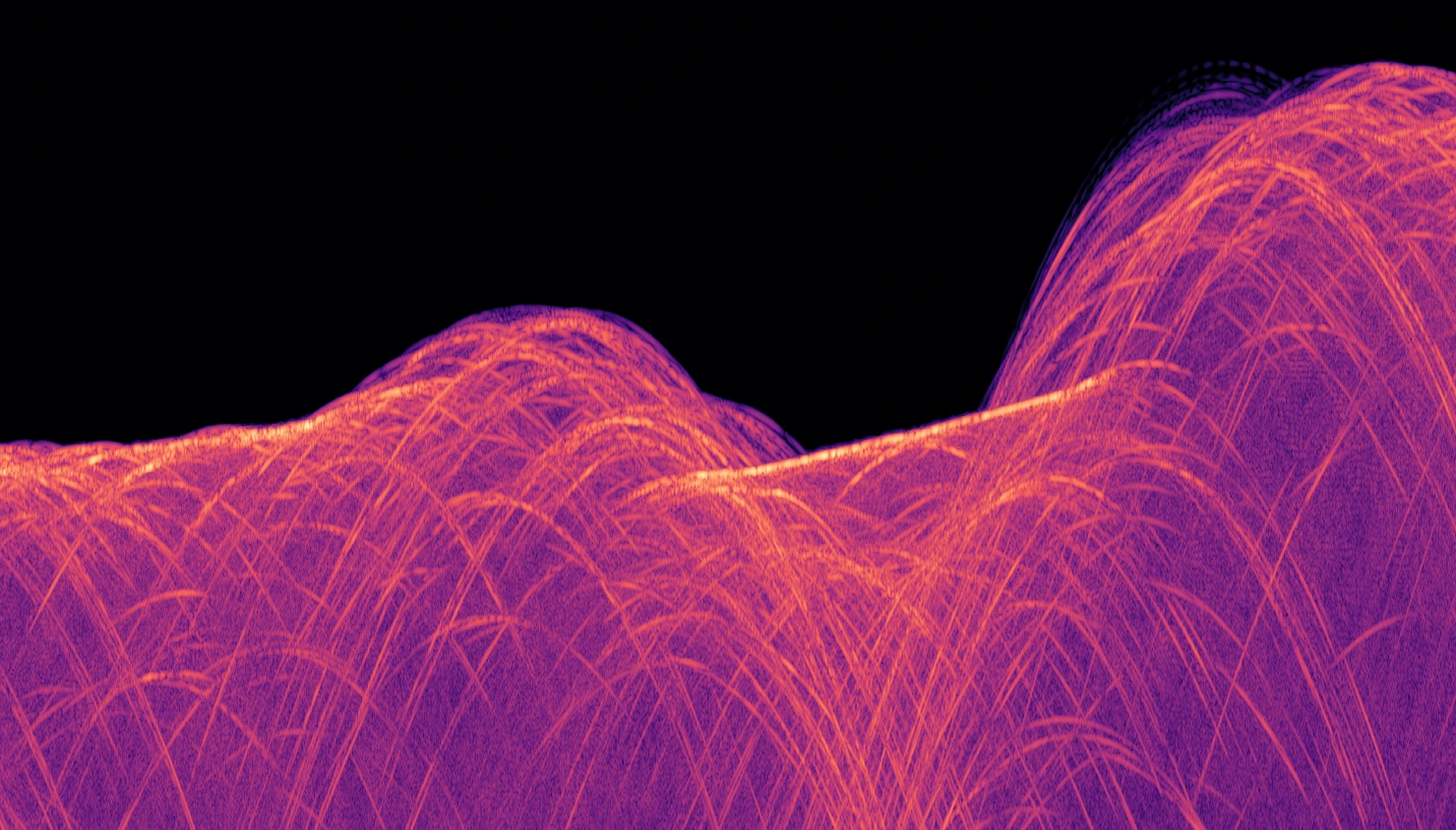
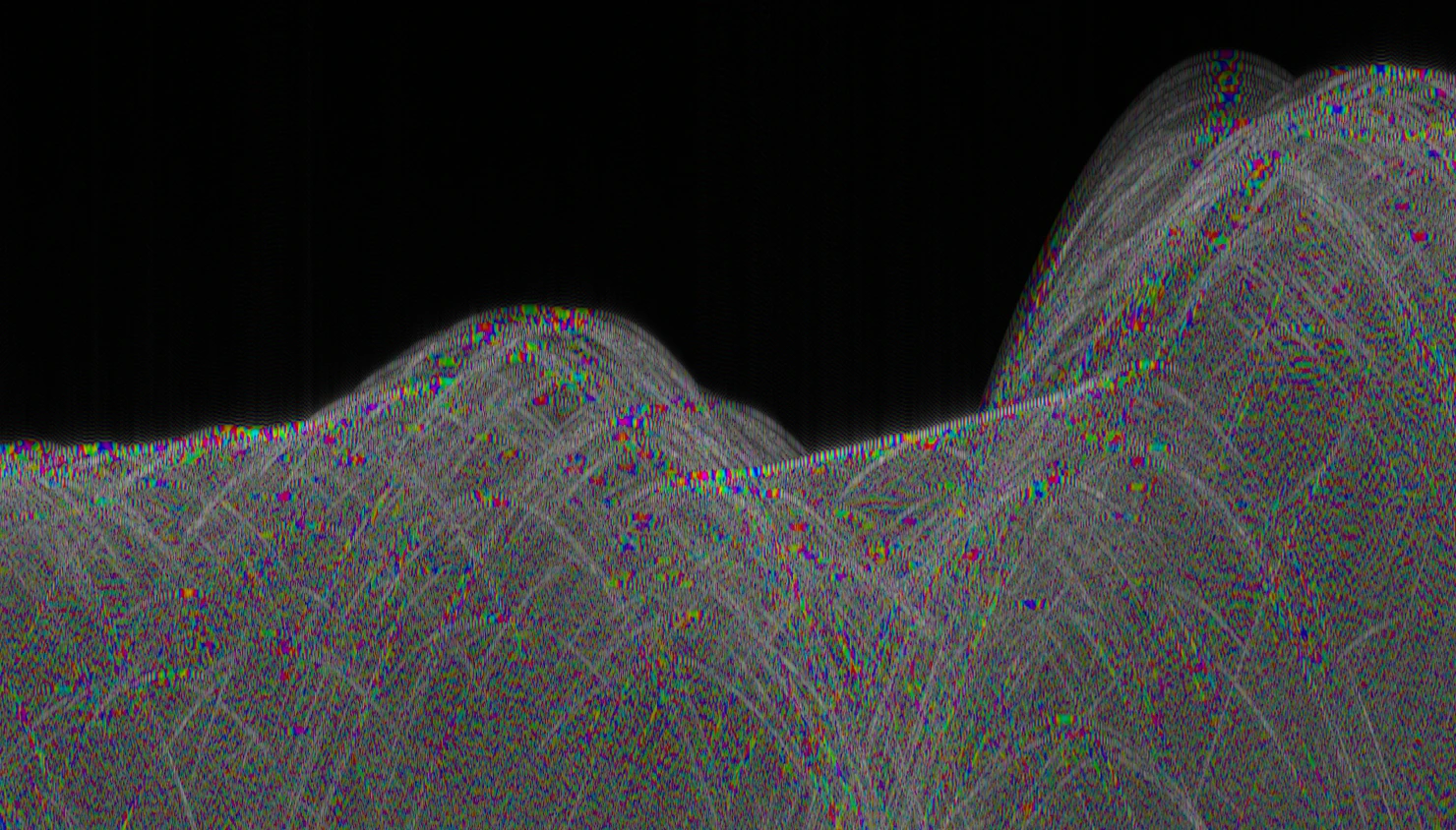
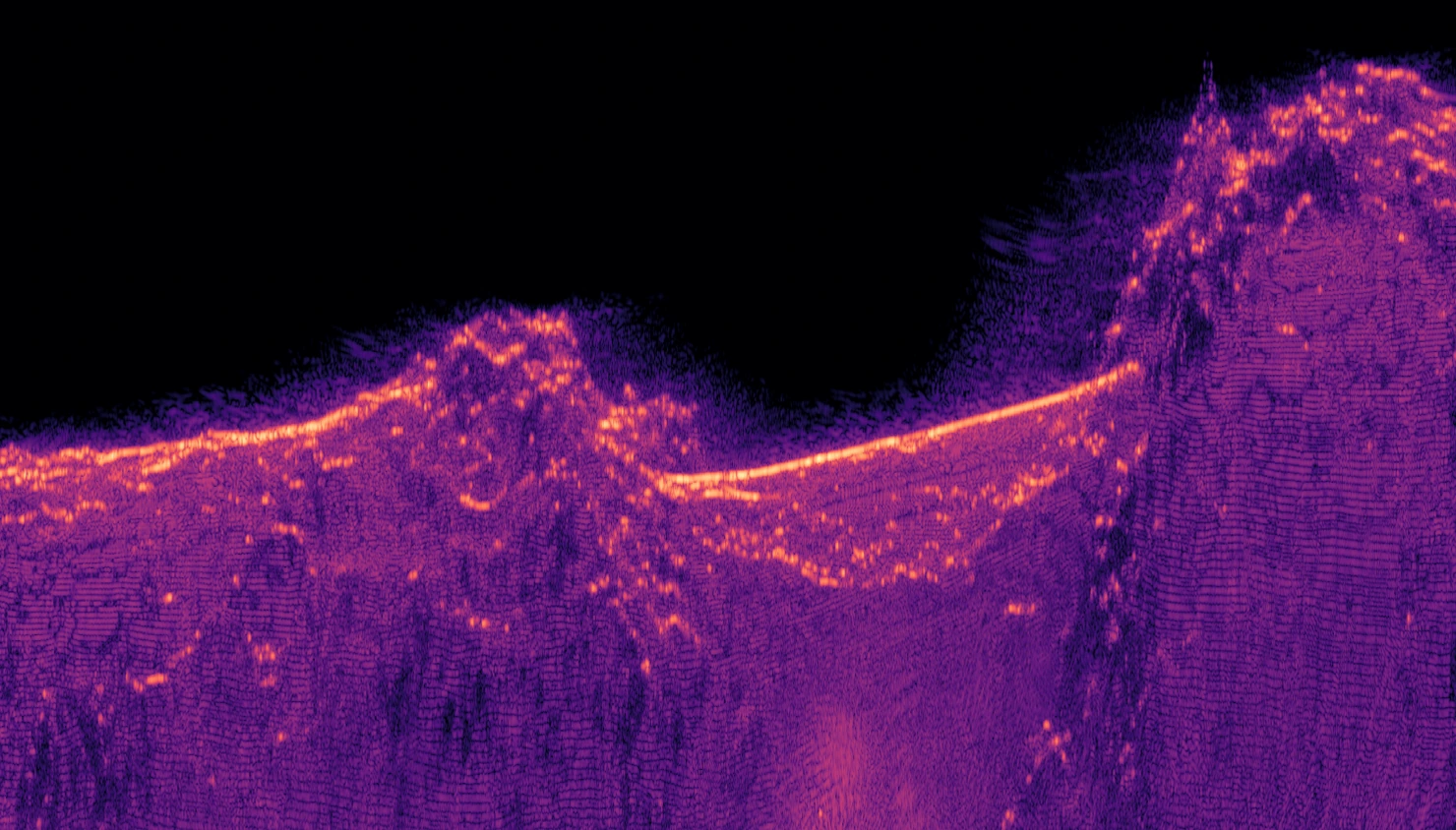
BRUS is a technical simulation environment for planetary and terrestrial radar sounders aimed at engineers, researchers, and graduate students who need to generate, inspect, and analyse large amounts of radar data.
.png)
Work across mission concepts, flight instruments, DEM products, antenna patterns, and radar parameter sets without rebuilding the workflow for each case.

Use real-valued backscattering functions and Kirchhoff facet methods within the same environment, so early studies and higher-fidelity runs stay in the same workflow.

Import PDS data, labels, auxiliary files, trajectories, and instrument metadata, then let BRUS auto-set the parameters needed to run comparable simulations.

Computation-heavy scattering functions are maximally efficient and prove to be 50× to 300× faster than comparable Python or MATLAB implementations.
Simulation methods
BRUS brings several families of widely-used formulations into a unified architecture. These include facet methods such as square, triangular, rough-facet linear phase approximations, etc., backscattering laws such as random rough Gaussian, Hagfors, etc., and a number of physicality enhancements such as fast Doppler shift or full-bandwidth scattering.
Move from fast feasibility checks to detailed comparisons against processed radargrams in a matter of minutes.
Universal clutter simulator
Start from PDS data files themselves rather than manually reconstructing the archive context.

BRUS automatically identifies the instrument, signal, target, compatible DEM, and trajectory.

Side-by-side view of simulated and real product, along with contextual scientific analysis tools.

Engineering use
BRUS takes advantage of a decade of experience in the field of radar sounder data acquisition and simulation, and was designed to be as practical as possible for someone working in that field.
The interface and file management system is intuitive, its standalone viewer is specifically taylored for visualisation of radar data, of any kind and from any radar sounder mission, with added thematic tools for radar signal analysis, and its core simulation routines were optimised to be extremely fast. A global DEM catalogue allows the creation of real-life simulation scenarios without leaving the app. Drag-and-drop a PDS file or BRUS simulation into the central window to view the product; drag-and-drop a DEM to analyse its Allan curve; and many more.
Lavatubes preserve records of lunar volcanism and offer potential shelter from radiation, impacts, and thermal extremes (Losarcos J. M. and Dombard A. J., 2025), making them particularly interesting locations in the context of a return to the moon. How would a lavatube appear as seen from a radar sounder?
Radar-sounder feasibility studies (Carrer L. et al, 2018) and Mini-RF evidence for a conduit beneath the Mare Tranquillitatis pit (Carrer L. et al, 2024) motivate this investigation. Recent exploration concepts, such as LunarLeaper, combine ground-penetrating radar with other geophysical measurements to constrain cavity geometry and accessibility (Mittelholz A. et al, 2026).
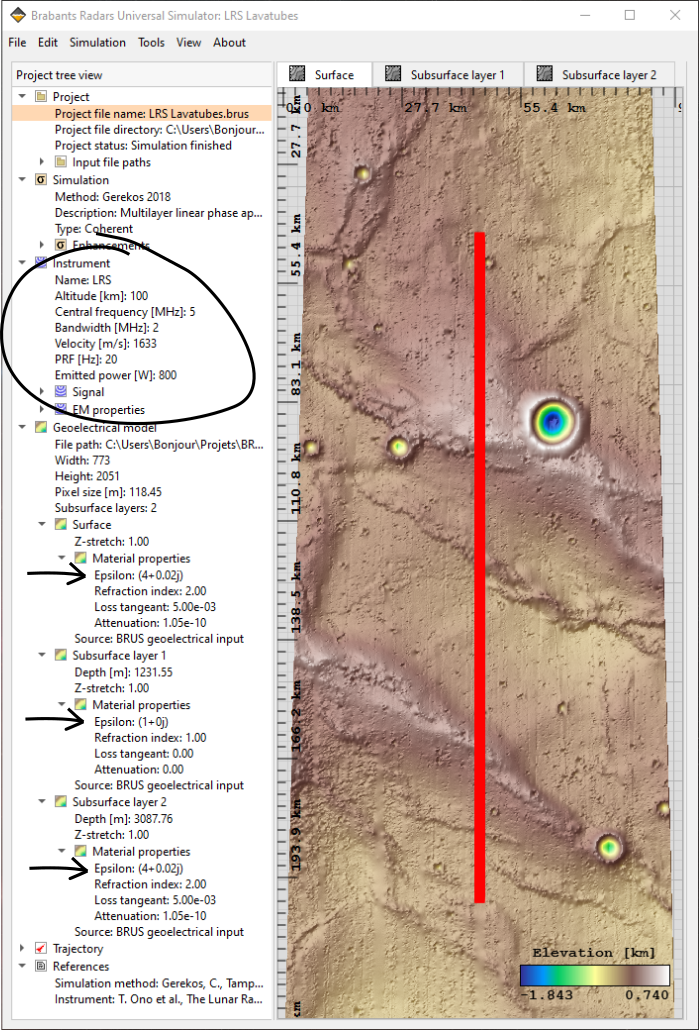
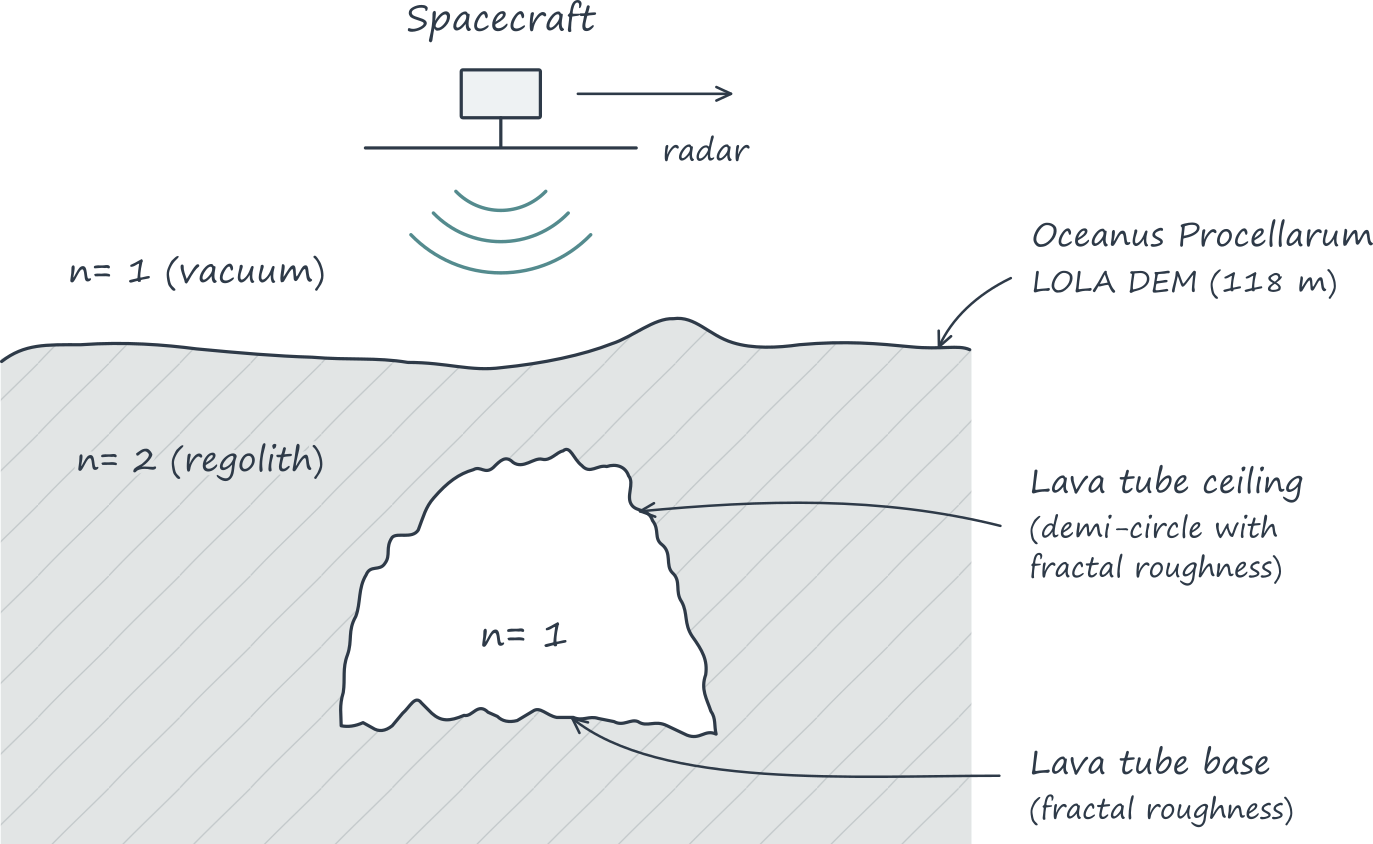
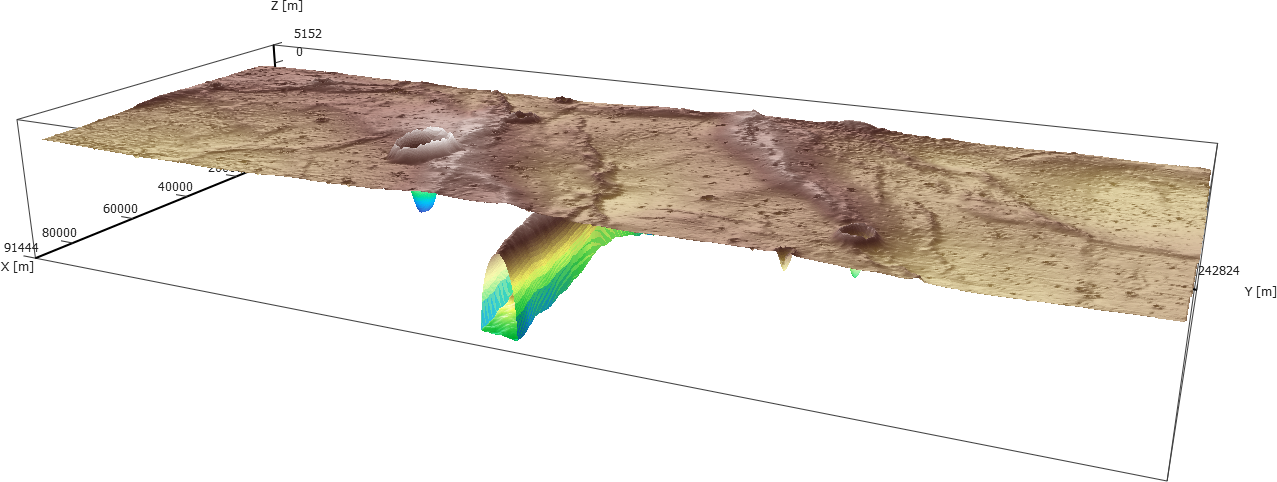
To construct the simulation, we start from a digital elevation model (DEM) derived from the Lunar Orbiter Laser Altimeter (LOLA), with a pixel spacing of approximately 118 m. The surface therefore retains the relief and craters of a real lunar terrain (Figure 2). We then introduce two synthetic subsurface interfaces defining the ceiling and floor of a lava tube. Its cross-section comprises an approximately semicircular roof and a comparatively flat base, with fractal roughness imposed on both. The three-dimensional view in Figure 3 shows how this prescribed cavity is embedded beneath the surface.
The geoelectrical model assigns an effective complex relative permittivity of 4 + 0.02i to the surrounding solid, corresponding to a refractive index of approximately 2 and a loss tangent of 0.005. The cavity has a relative permittivity of 1, as the vacuum above the surface. This gives three reflecting boundaries: the lunar surface, the solid-to-vacuum interface at the ceiling, and the vacuum-to-solid interface at the floor. The subsurface geometry and material properties are prescribed inputs, allowing us to relate each simulated return to its physical origin.
The simulation instrument, the Lunar Radar Sounder (LRS) flown on Kaguya (SELENE), is selected from the preset catalogue. Its central frequency is 5 MHz, its bandwidth is 2 MHz, and its transmitted power is 800 W. We define a straight trajectory crossing the tube, at a nominal altitude of 100 km and a velocity of 1633 m/s. A pulse repetition frequency of 20 Hz gives an along-track sampling interval of 81.65 m over a track of approximately 154 km. The red ground track can be inspected against the surface DEM in the main window (Figure 2).
We use the coherent multilayer method based on the linear phase approximation over triangular facets (Gerekos C. et al, 2018). The model accounts for reflection and transmission at dielectric boundaries, refraction along the propagation paths, and the phase of the scattered fields. Contributions from the surface and subsurface are summed coherently at the receiver. Retaining this phase information allows the same simulated acquisition to be examined after range compression and after focused synthetic aperture radar (SAR) processing.
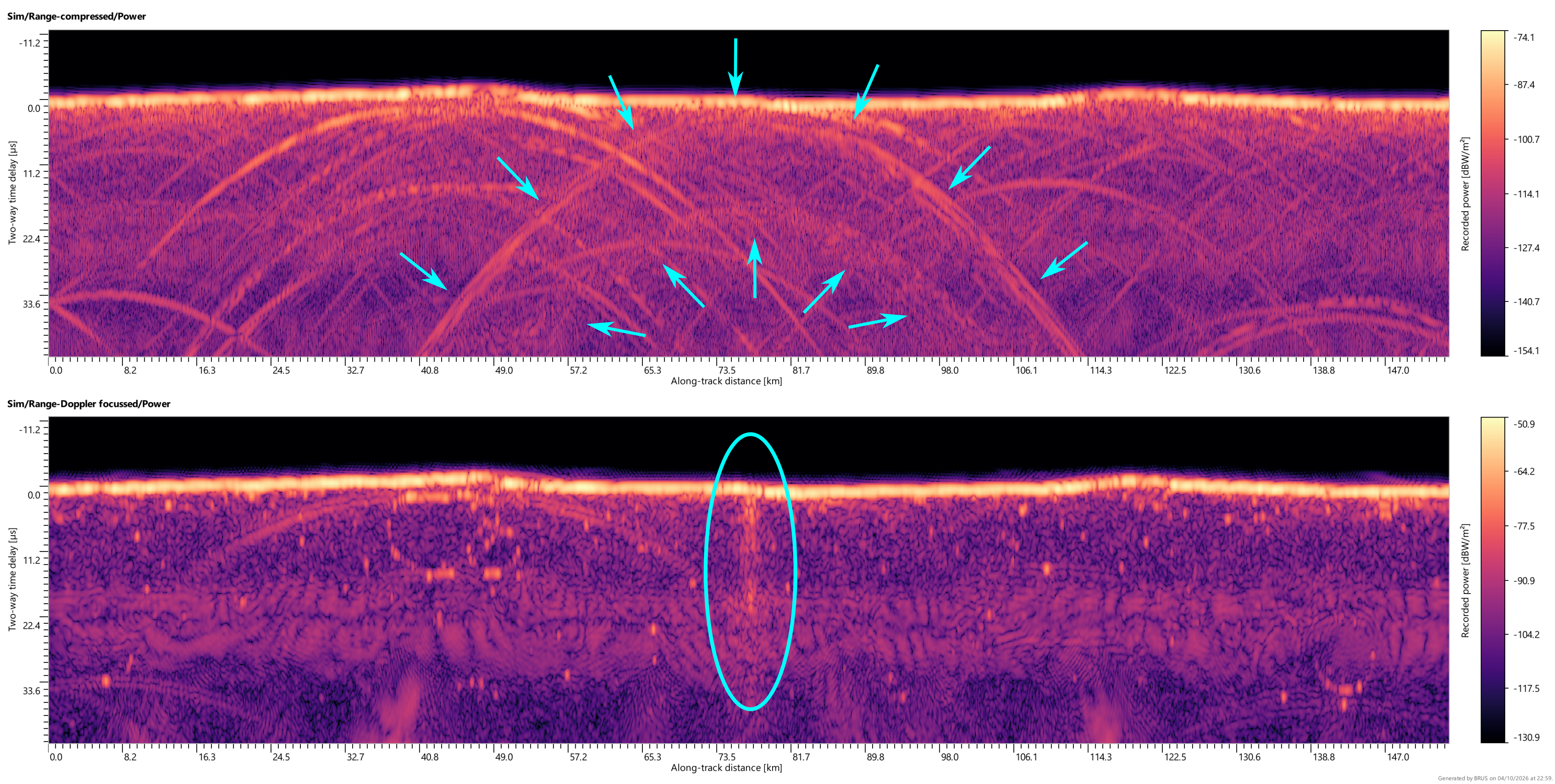
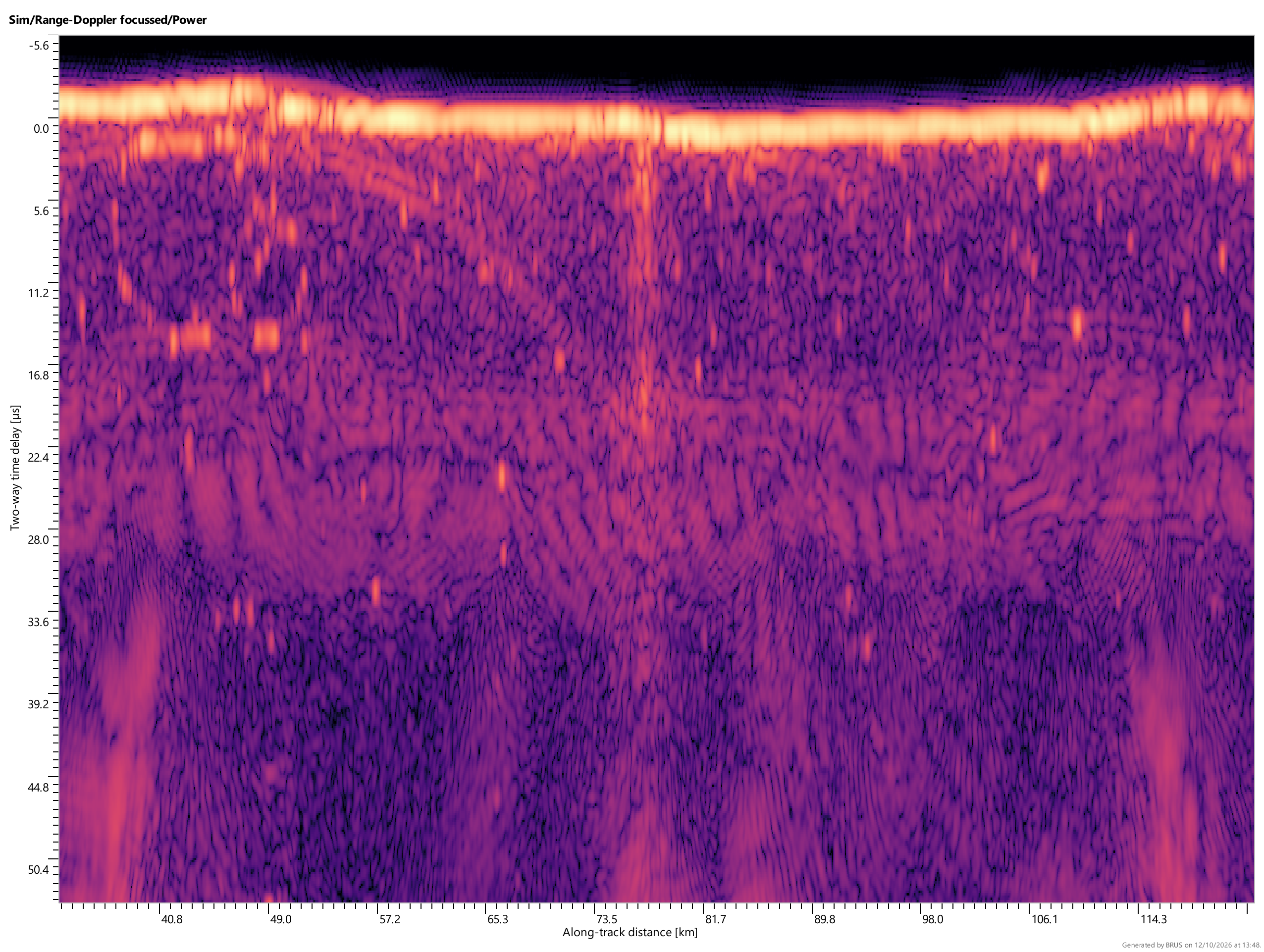
In the range-compressed radargram, the tube signatures are difficult to identify at first glance (Figure 4, top). The surface produces the dominant echo, followed by numerous delayed contributions from off-nadir terrain. The tube returns are spread over many successive pulses, and their hyperbolic traces overlap this clutter. Following Range-Doppler SAR focusing, two more localised subsurface features become visible beneath the central part of the surface echo (Figure 4, bottom). Coherent processing concentrates the contributions whose phase history matches the focusing model, improving their visibility in the radargram.
For this geometry, the recognisable focused signatures correspond to the ceiling and floor near nadir, when the instrument is approximately above the tube. The radargram consequently samples these reflecting portions of the cavity, without resolving its complete outline. Once their along-track positions and delays are known, we can return to the range-compressed image and identify the associated hyperbolic traces. Their delay evolution, curvature, amplitude, and phase can then be examined in more detail. In particular, the opposite dielectric contrasts at the roof and floor motivate a phase analysis, as investigated by (Carrer L. et al, 2018); as the simulation provides the full-phase information, they could be demodulated to reveal that relative phase shift (not shown here).
BRUS also provides tools to examine individual rangelines or an average from a selected portion of the radargram. By centring the averaging tool selection on the tube crossing, we can compare the surface and subsurface responses of the two processing products as functions of two-way time delay. This local selection limits the influence of unrelated along-track features and makes the relative strength of the three signatures easier to inspect.
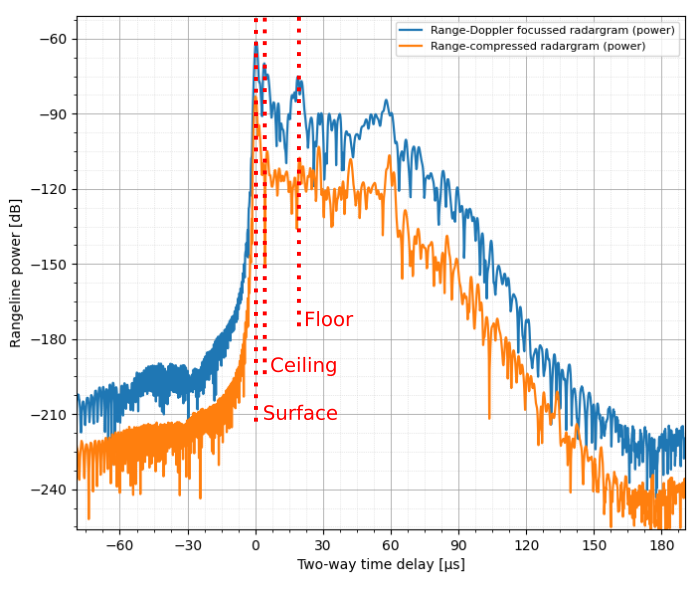
The marked traces in the focused profile identify the surface, ceiling, and floor responses at approximately 0, 4, and 20 µs, respectively (Figure 5). Their powers are about −60, −70, and −75 dB. The ceiling is therefore roughly 10 dB below the surface, while the floor is approximately 15 dB below the surface and 5 dB below the ceiling. This ordering is consistent with transmission through the surface and propagation through the lossy overburden; the floor return additionally traverses the ceiling boundary in both directions. Interface roughness and geometry also affect the backscattered power, so the differences cannot be attributed to attenuation alone.
The corresponding subsurface features are less distinct in the range-compressed profile. Focusing makes the three signatures easier to separate in this acquisition, while the range-compressed data retain the extended echo histories needed for a deeper analysis. Their absolute power difference also depends on processing normalisation. The useful result of this case study is thus the connection between prescribed subsurface geometry, radargram features, and local power profiles. Assessing the detectability of other tubes requires varying their geometry, dielectric properties, and roughness, together with the acquisition and processing parameters.
As a matter of scientific curiosity and in consideration of plans for further exploration of lunar lavatubes (Brož P. et al., 2025), we present the same acquisition discussed above with an LRS-like instrument that has a frequency of 3 Mhz and 1 MHz. All other instrument parameters (bandwidth, PRF, etc.), simulation parameters (trajectory, method, etc.), and range-doppler processing parameters (0 Hz Doppler centroid, etc) remain the same. The results for 5 MHz (default LRS), 3 MHz, and 1 MHz are shown in Figure 6. One can observe the fact that lower frequencies allow more penetration and less sensitivity to roughness, and although we admit that the 2 MHz bandwidth may be challenging to achieve in these cases, the simulated radagrams show significantly heightned lavatube detectability. In the "optimal" case of 3 MHz, there are hints that the shapes of the lavatube roof and ceiling themselves could be studied. This highlights the flexibility of BRUS for mounting end-to-end detectability assessments for a particular target.
© Brabants Radars. Figures 2, 3, 4, 5, and 6 extracted directly from BRUS.
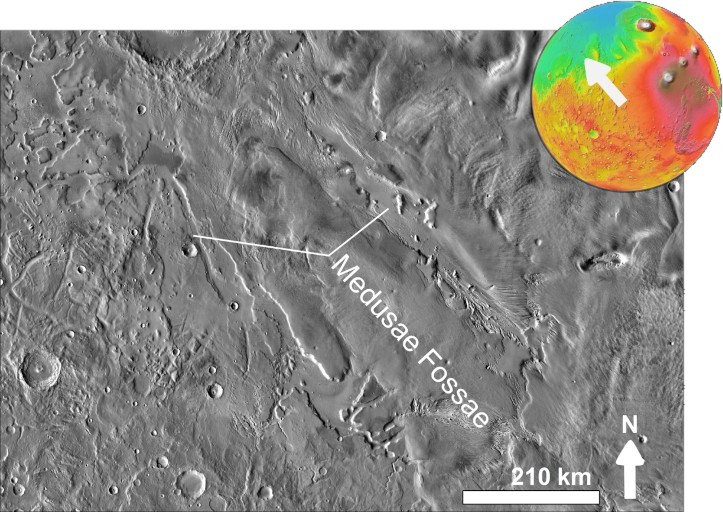
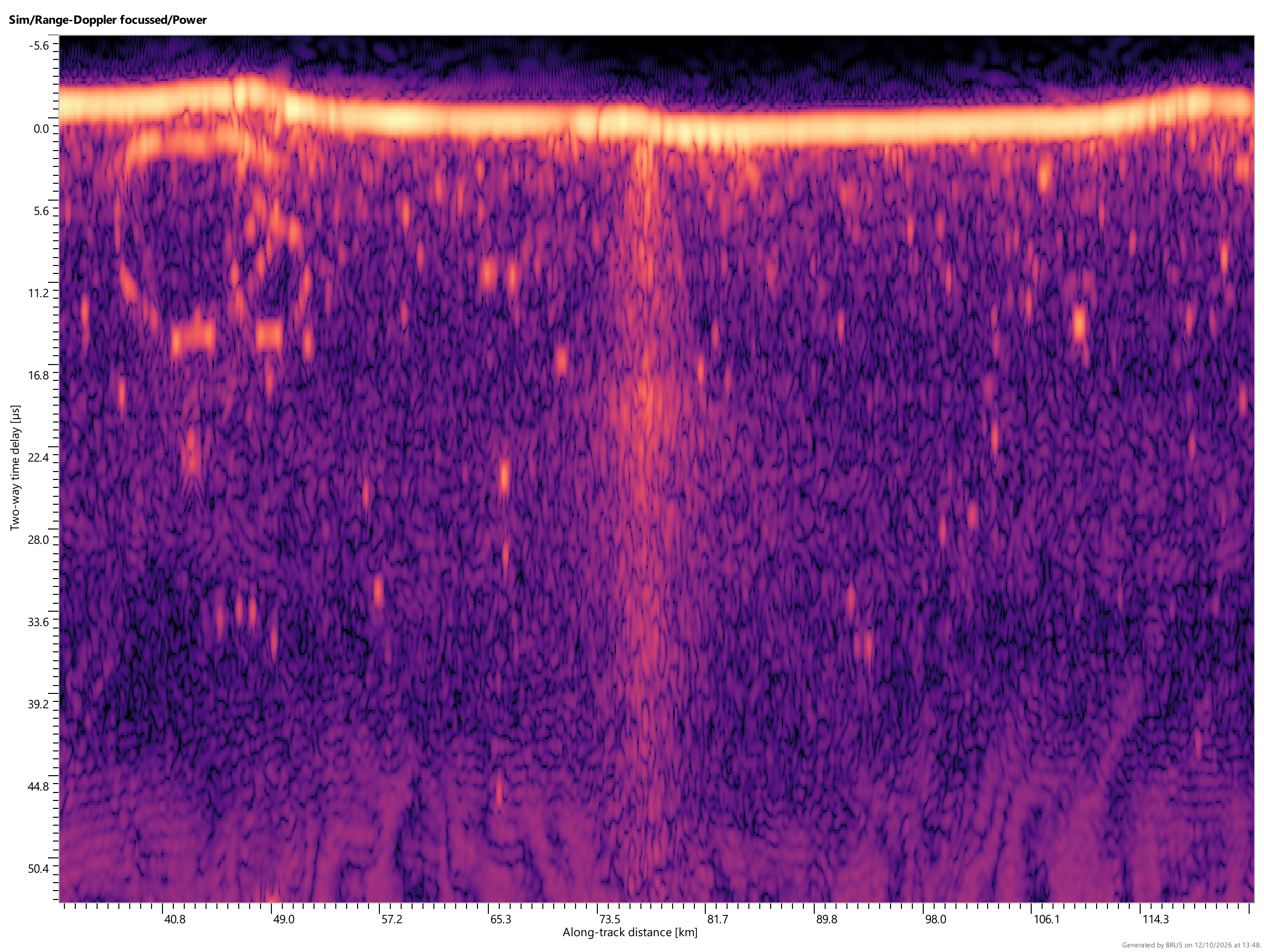
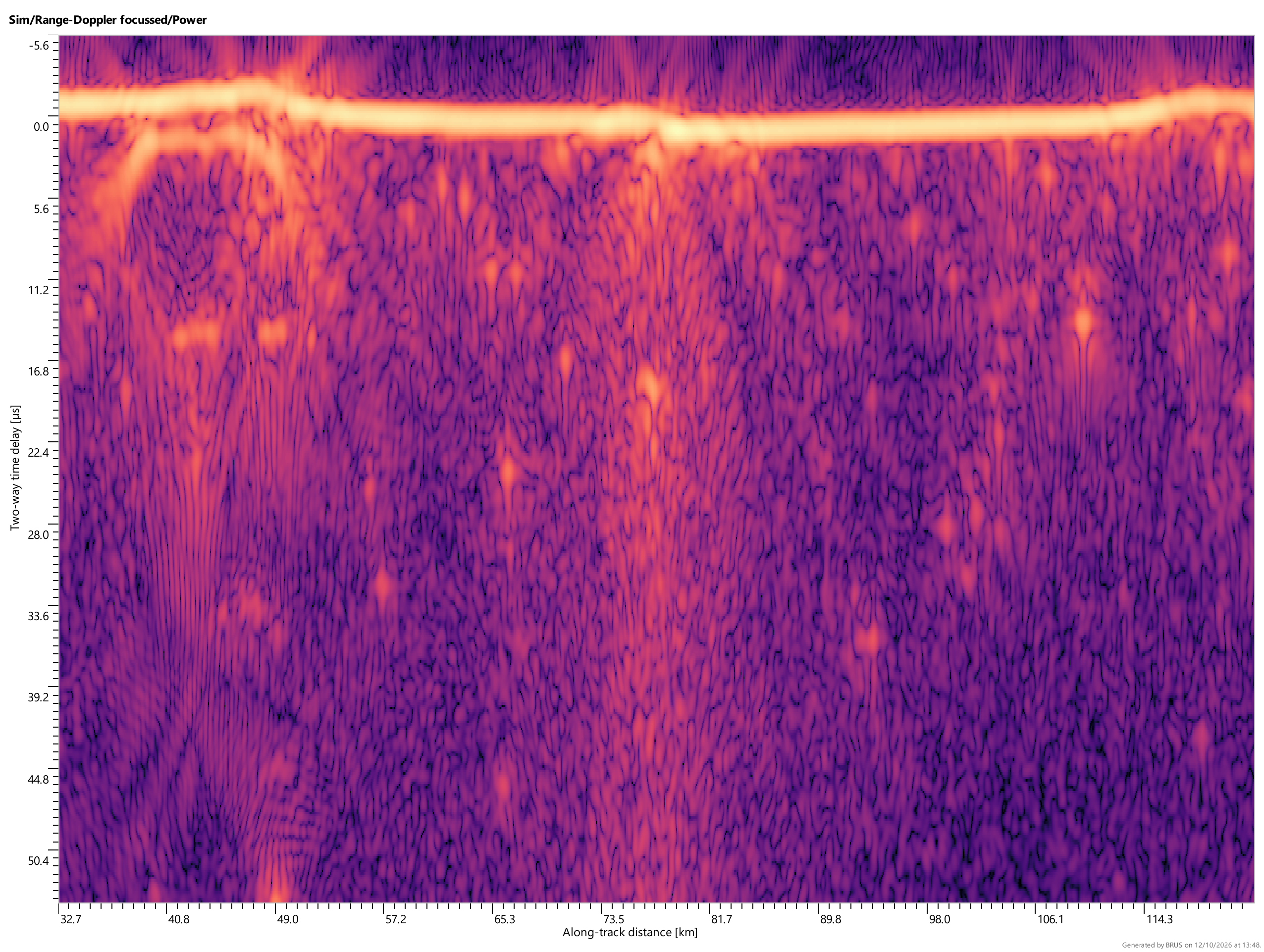
The Medusae Fossae Formation (MFF), near the Martian equator, contains deposits whose origin and composition remain central questions in planetary geology. Internal reflectors observed by the Mars Advanced Radar for Subsurface and Ionospheric Sounding (MARSIS) instrument aboard Mars Express support an interpretation involving ice-rich layered material beneath a comparatively dry cover (Watters et al., 2024). Establishing the subsurface origin of these echoes requires testing whether off-nadir surface relief could produce returns at the same delays. How can BRUS construct a regional catalogue of clutter simulations to support this analysis?
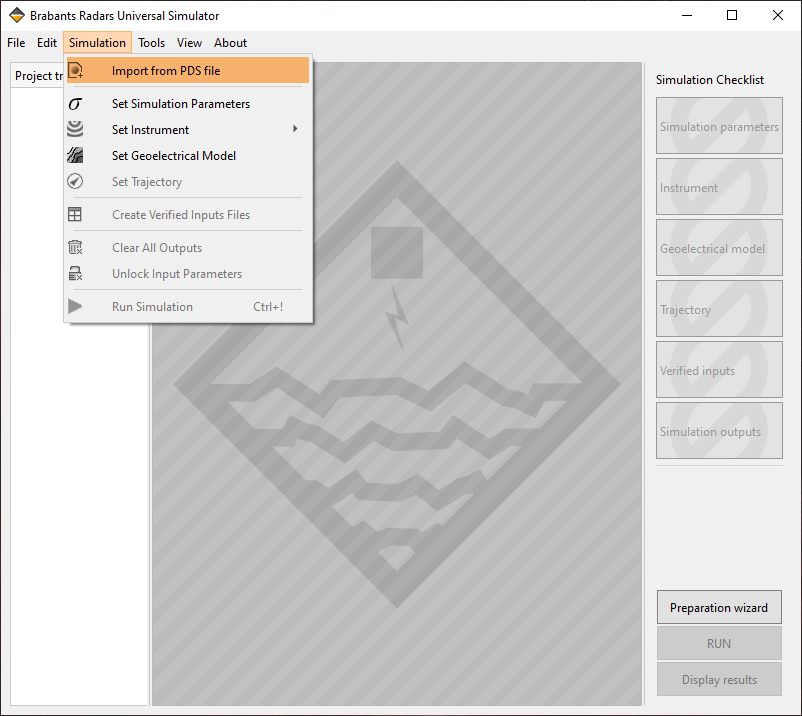
We begin by importing the relevant MARSIS tracks together into the PDS import wizard (Figure 2). BRUS associates each science data file with its label and auxiliary product, reads the mission, instrument, target, product type, and acquisition mode, and checks that the collection is compatible. For these products, it identifies Mars Express, MARSIS, Mars, and the SS3 tracking mode automatically. The auxiliary records supply spacecraft positions and velocities, while the science records provide the transmitted frequency for each acquisition and frequency channel. BRUS loads the corresponding instrument preset and carries these acquisition-specific quantities into the individual simulation scenarios.
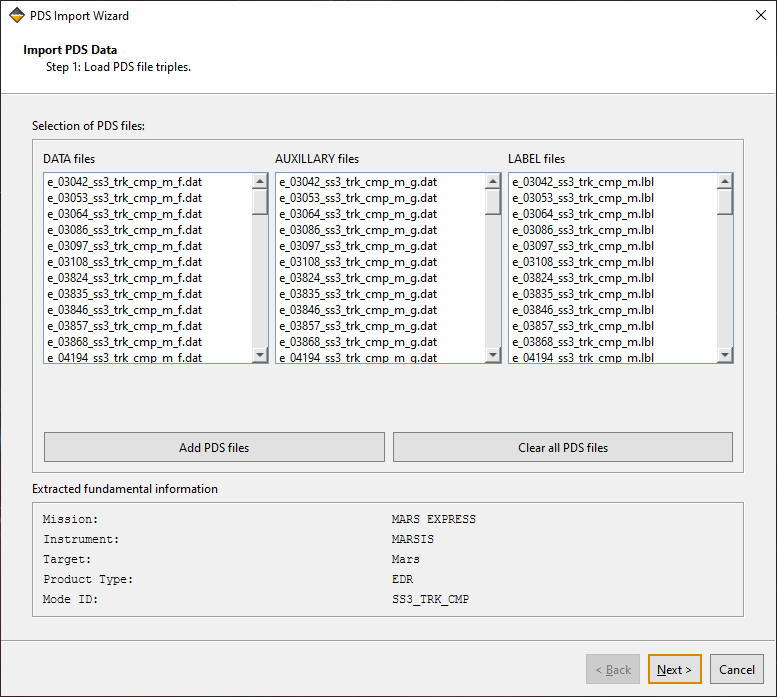
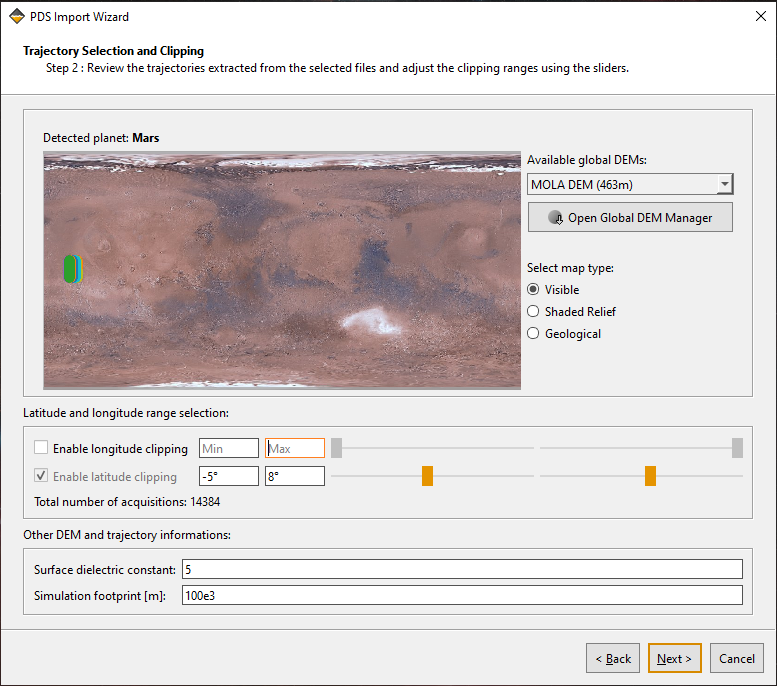
We select the global Mars Orbiter Laser Altimeter (MOLA) DEM, derived from Mars Global Surveyor altimetry (Smith et al., 2001), using the catalogue entry with approximately 463 m pixel spacing. The trajectory page displays the tracks on a planetary map and allows latitude and longitude limits to define the region of interest. Clipping retains the original acquisition samples and their associated geometry and frequencies. Here, the surface relative permittivity is set to 5, and the simulation footprint radius to 100 km. Selecting the coherent Nouvel et al. (2004) formulation, based on the linear phase approximation over square facets, completes the principal scientific choices; the wizard then creates and verifies the simulation inputs.
Global DEM handling is integrated into this preparation. BRUS resolves the selected DEM's planetary radius, sampling, and tile layout, derives a terrain view from the clipped tracks and their footprint margins, and handles longitude wrapping when assembling the required tile sections. During simulation, it reads a native-resolution terrain patch around each acquisition, converts the sampled planetary radii into Cartesian coordinates, and rotates the terrain, spacecraft position, and velocity into a common local frame. The patch is resampled onto the regular grid required by the square-facet method and masked to the prescribed circular footprint. This lets a global topographic archive serve local scattering calculations directly, without manually preparing a DEM for every track.
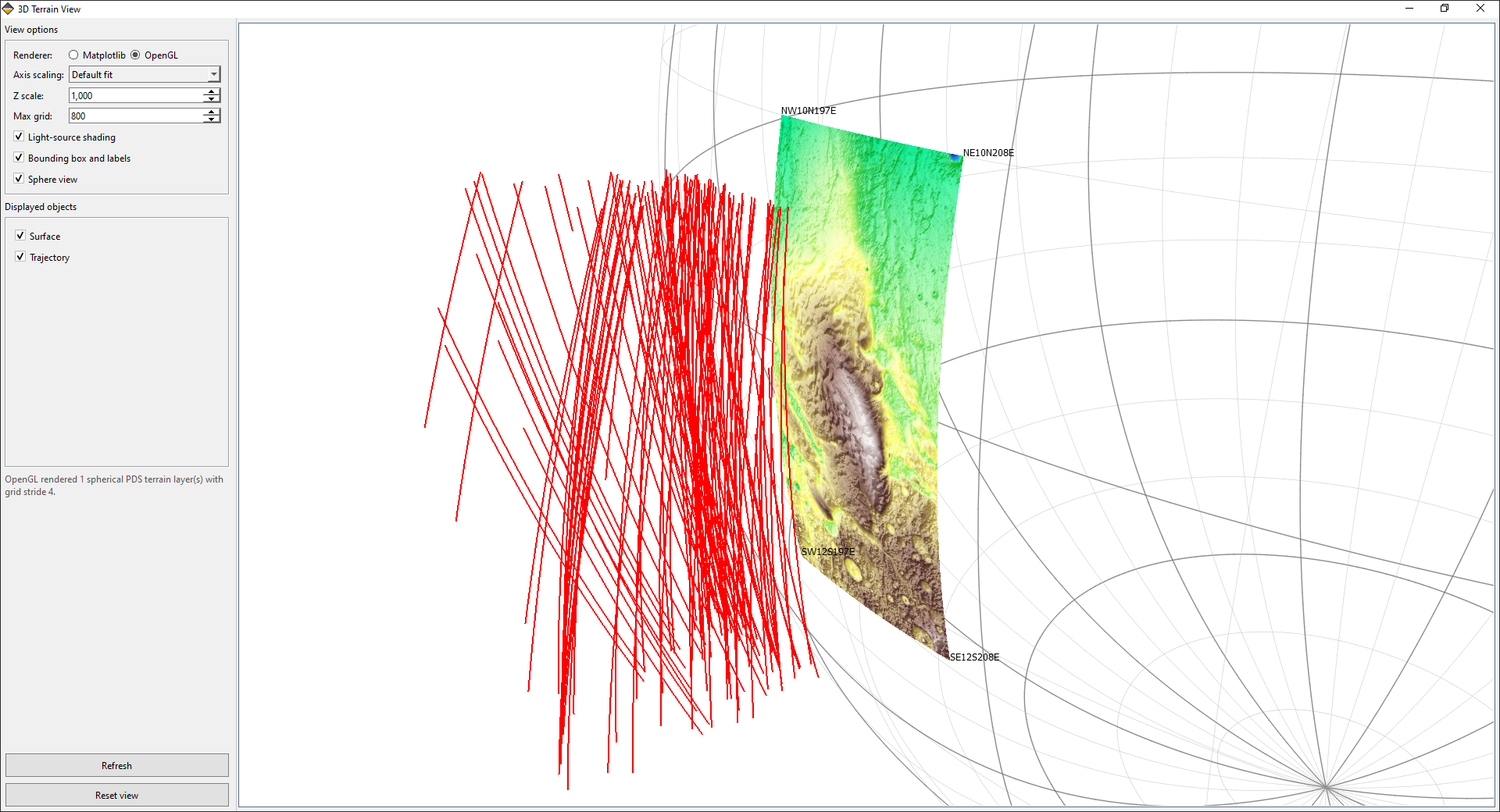
Importing the collection creates a PDS superproject. Each track receives its own simulation project, trajectory inputs, and output folder, while the parent records the individual products and their progress. Each child project also records its parent, so the association works in both directions. Common terrain, instrument, and method settings are managed at superproject level, with shared input files referenced by the children to reduce duplication. Acquisition-specific instrument information is retained where needed, including the MARSIS frequency sequences. The resulting directory structure makes every track accessible individually, while the three-dimensional view places the collection in its regional topographic context (Figure 3).
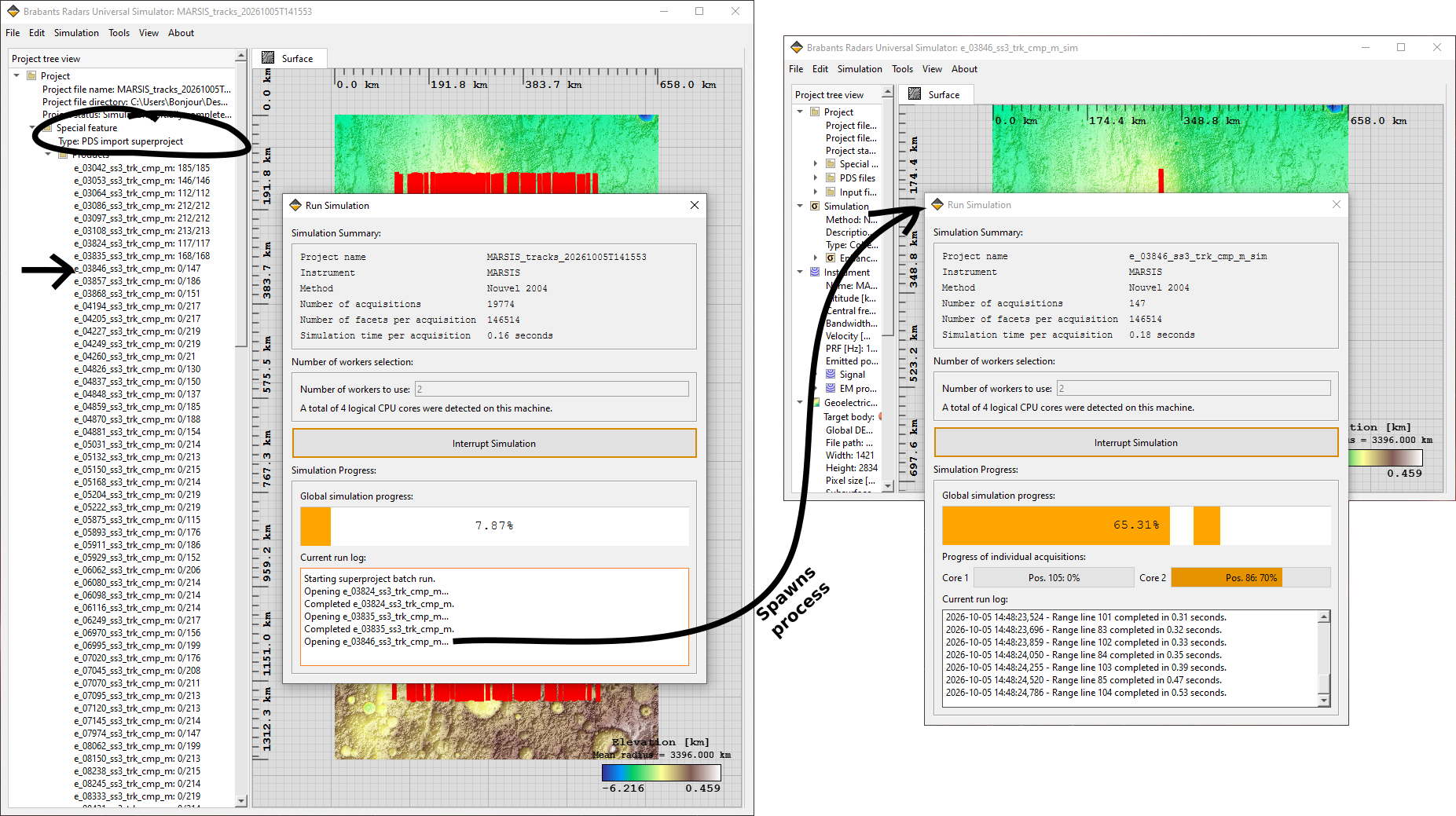
The superproject runs the collection automatically (Figure 4). For each unfinished track, it opens a new BRUS window, loads that track's scenario, and launches the simulation with the selected worker count. Once the track is complete, BRUS saves the updated progress, closes the child window, and proceeds to the next product. The parent maintains the catalogue's overall progress alongside each track's completed acquisition count. Completed products are skipped when a batch resumes, so a large collection remains manageable across interrupted sessions.
In the catalogue run reported here, generating fully coherent cluttergrams for 103 tracks, with a 100 km simulation footprint radius, took less than ten minutes in total. The simulation sums the complex scattered fields, retaining both amplitude and phase. This speed makes regional clutter modelling practical as a routine part of interpretation: a consistent collection can be generated with the same terrain source, surface properties, and scattering method, while preserving the acquisition geometry of each imported track.
The resulting catalogue can be examined through complementary, synchronised views (Figure 5). Displaying a simulated cluttergram alongside the observed radargram reveals which delayed structures are reproduced by surface scattering and highlights a subsurface reflector in the measured data. The comparison uses echo delay and morphology, with each product retaining its own power scale. A delayed echo that lacks a corresponding simulated return supports a subsurface interpretation within the adopted terrain and scattering model, following the logic of the clutter assessment in Watters et al. (2024). The synchronised, rectified trajectory view relates along-track locations to surrounding relief, helping identify possible off-nadir clutter sources.
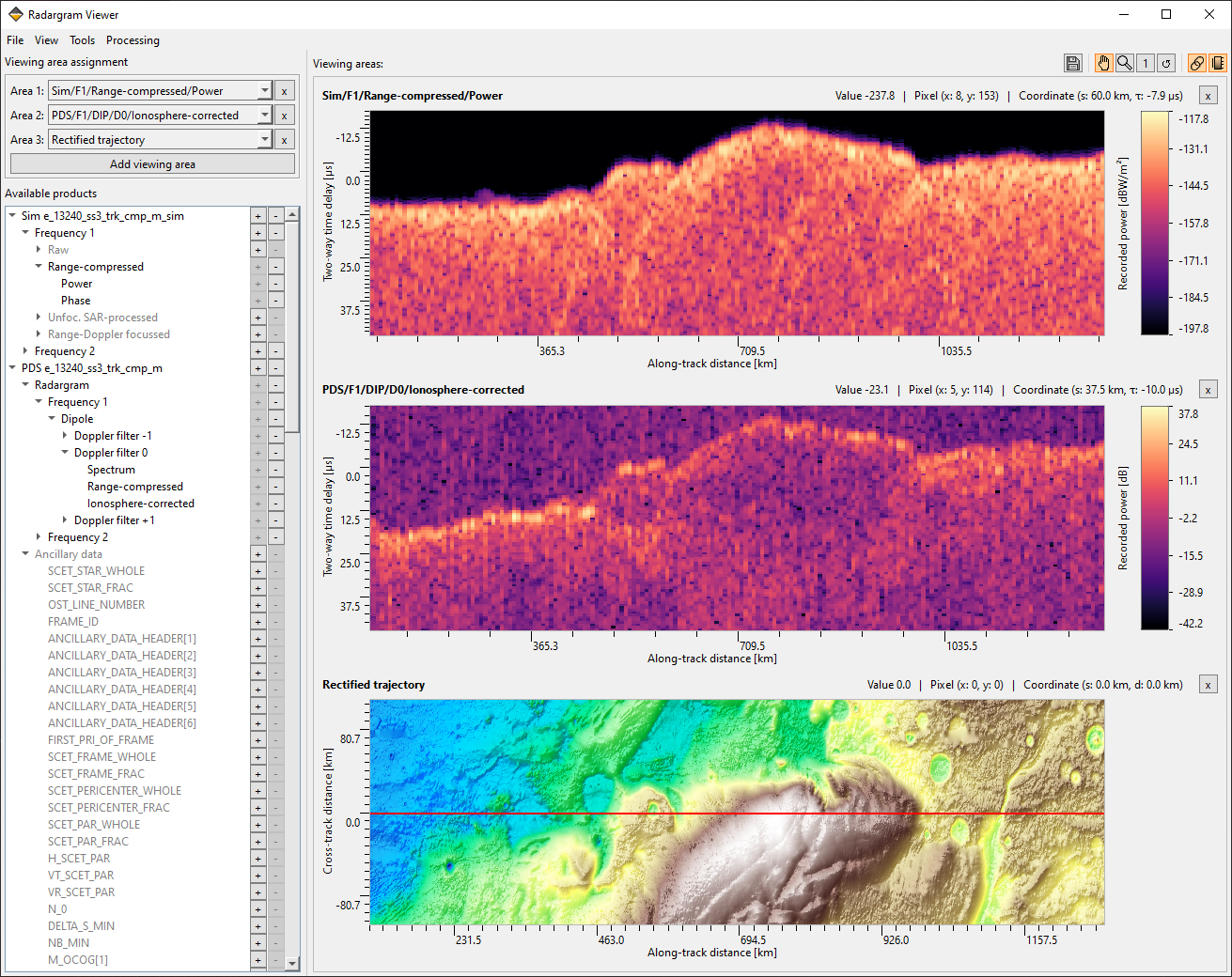
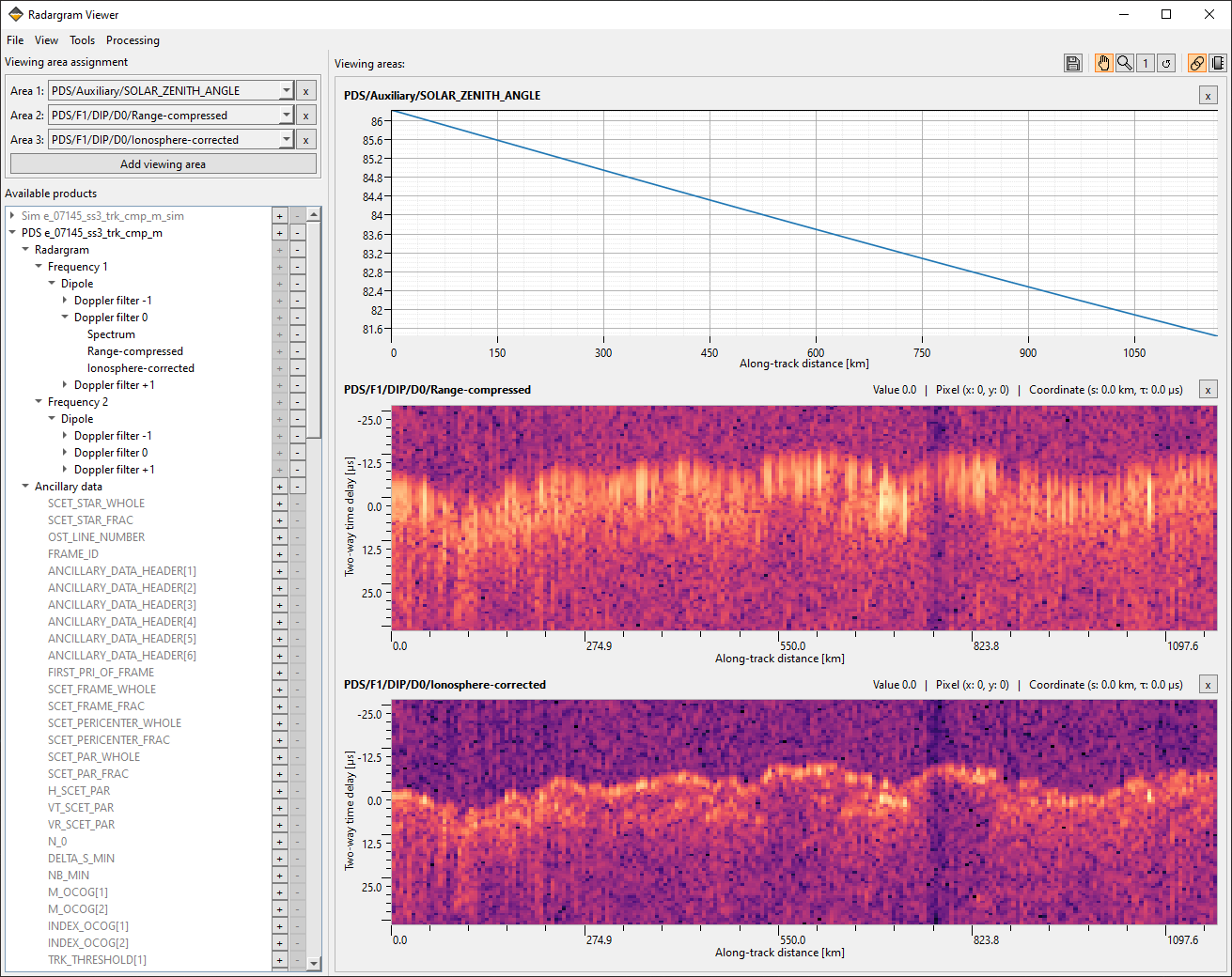
The viewer also exposes the internal structure of the MARSIS products. Individual frequency channels, antenna and Doppler-filter branches, spectra, range-compressed echoes, and ionosphere-corrected products can be selected separately. Ancillary fields embedded in the science records and parameters from the auxiliary products can likewise be displayed in their own viewing areas. Figure 5b combines solar zenith angle with two radar processing products, allowing acquisition conditions and processing effects to be examined together. The catalogue therefore connects simulated surface scattering with the measurements and the information needed to interpret them.
Preparing a regional catalogue consequently requires only a small number of scientific choices: the observations, geographic extent, terrain source, surface properties, footprint, and simulation method. BRUS handles the repeated project preparation and execution. The transformational value lies in combining this scale of simulation with versatile viewing options: researchers can move directly from a catalogue-wide clutter assessment to an individual reflector, its terrain context, and its acquisition metadata within the same environment.
© Brabants Radars. Figures 2, 3, 4, and 5 extracted directly from BRUS.
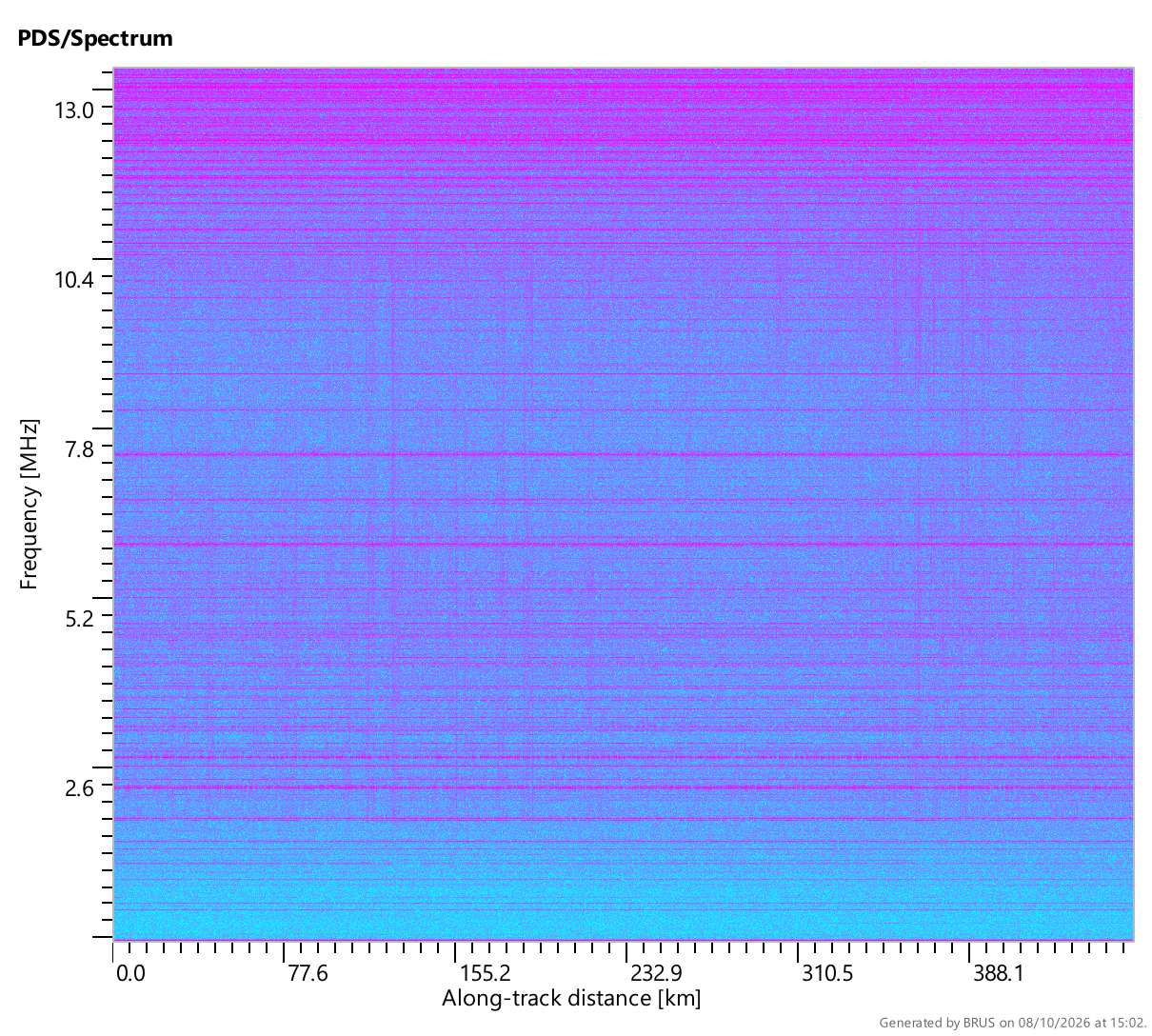
Raw radar sounding data contain more than echoes from a planetary surface and subsurface. In this case study, we examine data from the Shallow Radar (SHARAD) instrument aboard Mars Reconnaissance Orbiter (MRO) in the frequency domain in order to highlight the various scientifically-relevant insights that can be extracted from radargrams in spectral representation. BRUS can display any complex-valued radargram imported from the Planetary Data System (PDS) in the Fourier domain.
Figure 1 shows the Fourier transform of a decompressed raw SHARAD radargram. Each column corresponds to the spectrum of one rangeline, and the vertical axis follows a baseband frequency convention, spanning 0–13.3 MHz on the plot, but corresponding to 13.3 MHz–26.7 MHz in reality (Croci R. et al, 2011). In this comparatively quiet spectrum, repeated vertical traces occupy exactly the 10 MHz bandwidth of the transmitted chirp. These are reflections of the active radar signal: brief in acquisition time, but extending across the chirp's frequency band.
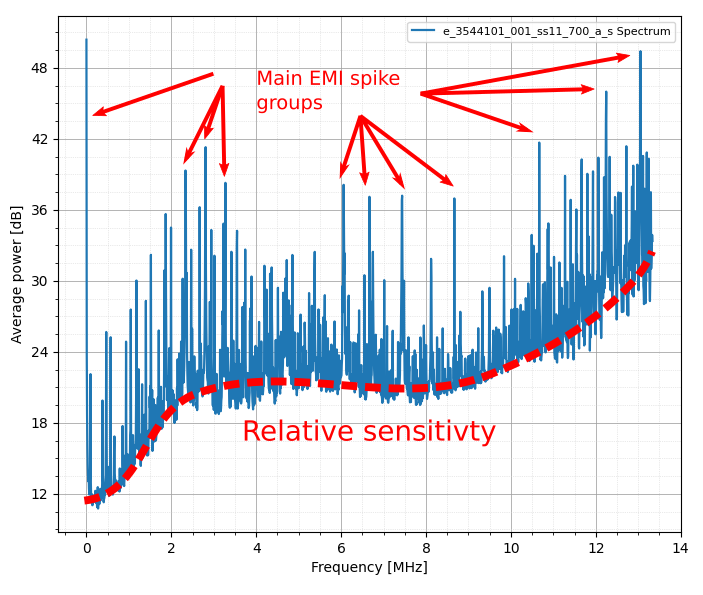
The persistent horizontal lines have a different origin. They are narrowband electromagnetic interference (EMI) produced by other instruments or spacecraft subsystems. Averaging the spectral power over successive rangelines makes these spikes particularly clear (Figure 1, bottom). Prominent peaks occur near 2.3, 2.8, 3.2, 6.0, 6.7, 7.4, 8.7, 10.7, 12.2, and 13.1 MHz (basebandà, with a strong component near zero frequency. BRUS can characterise the EMI distrurbances at mass for a given set of observations of a given instrument.
The smooth background envelope beneath the narrow peaks also provides an estimate of the relative spectral sensitivity (Figure 1). Interpreting this envelope as an instrument response requires accounting for the incident background, reflected chirp energy, and acquisition settings. An absolute calibration additionally requires a reference signal of known spectral flux.
We next examine SHARAD product 6763001, acquired on 30 December 2020, which contains a strong train of solar radio bursts with extensive spectral fine structure (Figure 2). This event forms part of the dataset used to demonstrate SHARAD's capabilities as a solar radio observatory through correlated observations with dedicated heliophysics spacecraft (Gerekos C. et al, 2024).
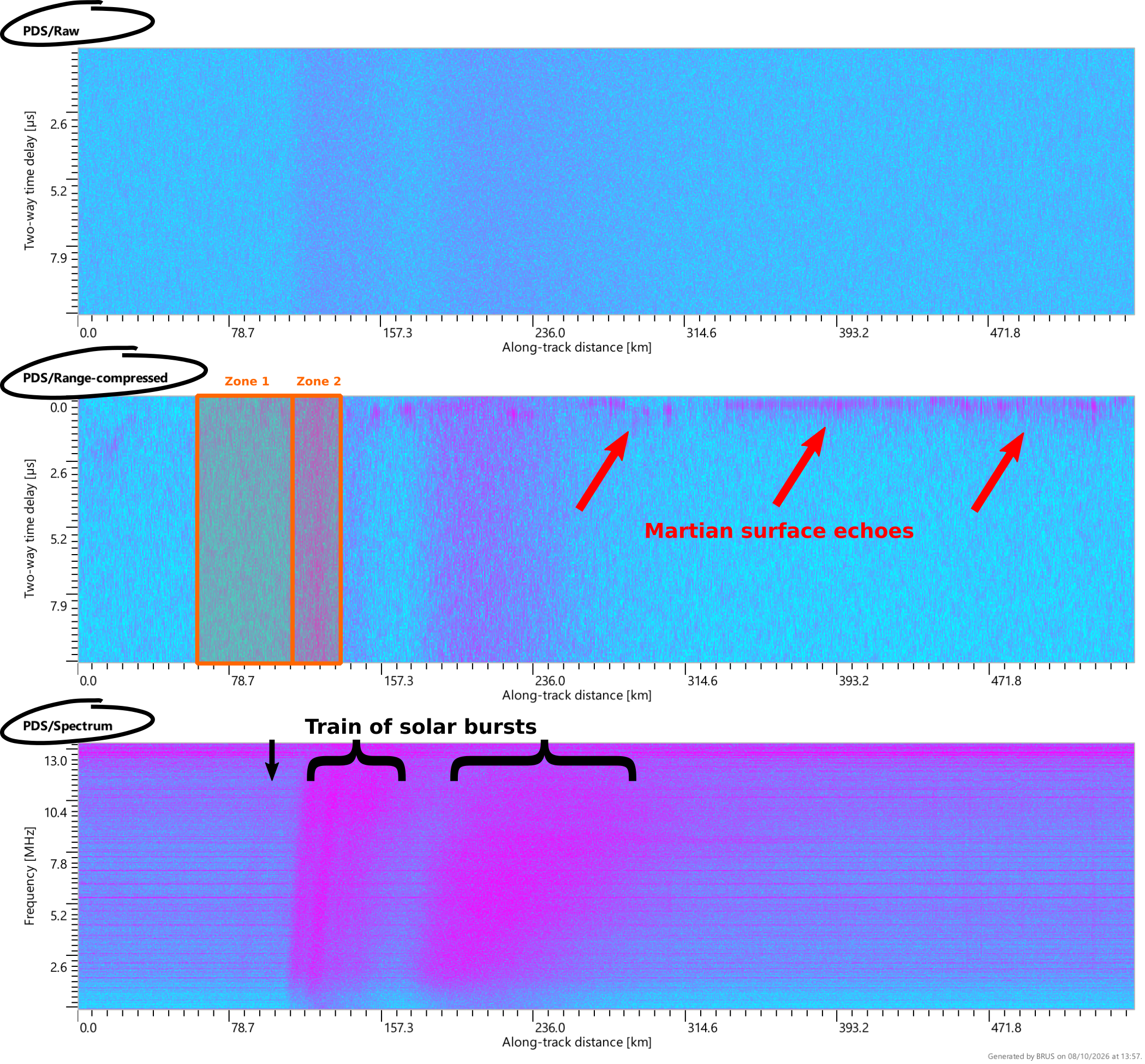
The successive bursts occupy the same horizontal positions in all three views. In the raw data, they appear as increases in received power distributed throughout the listening window. Range compression concentrates the reflected chirp into the surface echoes highlighted by the red arrows, while the solar emission remains a diffuse background. In the spectrum, the same events reveal their frequency-dependent evolution and fine structure, alongside the persistent EMI lines. Synchronised pan and zoom preserve the corresponding acquisition positions across the views, making it straightforward to relate a spectral feature to its expression in the raw and range-compressed data.
Thus, all three representations reveal the presence of solar emission, while the spectral view exposes the frequency drift, narrow structures, and frequency-dependent durations needed for its physical interpretation. These properties can constrain the generation and propagation of solar radio bursts, including the plasma inhomogeneities encountered by the emitting electron beams (Jebaraj I. C. et al, 2023).
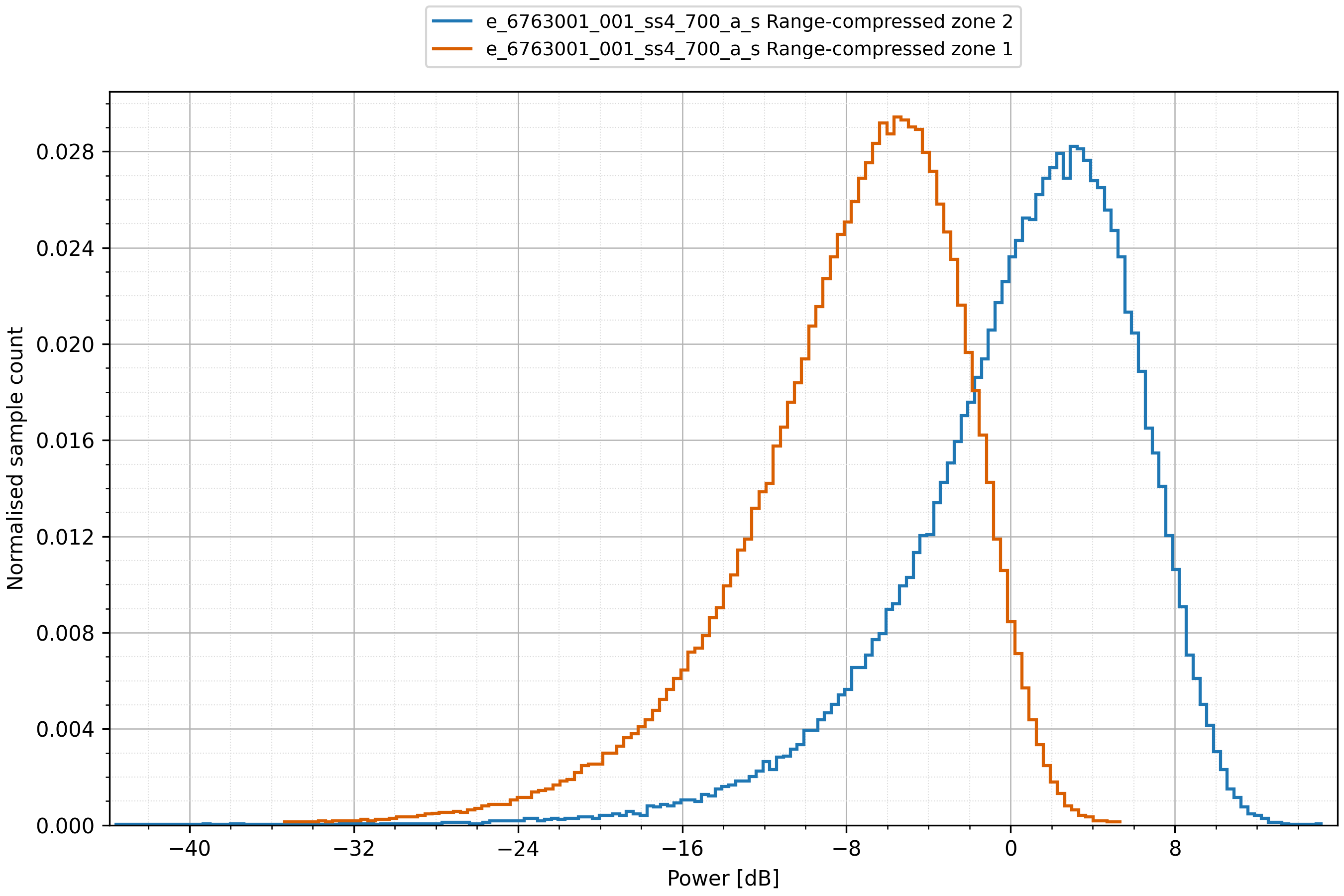
To quantify the change in background power, we compare the range-compressed samples in Zone 1, without a prominent burst, and Zone 2, during a strong burst (Figure 2). Figure 3 shows their power histograms, with counts normalised so that selections of different sizes can be compared. During the burst, the histogram peak shifts towards higher power by over 8 dB, indicating an increase in the effective noise floor. Such comparisons help assess how solar emission affects the effective noise floor and the visibility of weak radar echoes.
This analysis can be repeated at scale to characterise an instrument's EMI environment and relative spectral sensitivity. As BRUS can also plot ancillary and auxiliary data in synchrony with the radar products, it becomes easy to find correlations between observed radargram features and the internal spacecraft state or acquisition geometry, supporting both radar data analysis and the scientific exploitation of signals of astrophysical origin.
© Brabants Radars. Figures extracted directly from BRUS.
Among the different radar instruments onboard upcoming Venus-bound mission concepts, VenSAR (Venus Synthetic Aperture Radar, Ghail RC et al, 2018), onboard ESA's EnVision mission, VISAR (Venus Interferometric Synthetic Aperture Radar, Hensley S. et al., 2015), onboard NASA's VERITAS (Venus Emissivity, Radio Science, Interferometric Synthetic Aperture Radar, Topography, and Spectroscopy) mission, and VSAR (Venus S-band Synthetic Aperture Radar), onboard ISRO's Venus Orbiter Mission will image the surface, while SRS (Subsurface Radar Sounder, Bruzzone et al., 2020), onboard EnVision and VARTISS (Venus Advanced Radar for Topside Ionosphere and Subsurface Sounding, Narukull VR, 2026), onboard Venus Orbiter Mission will test hypotheses for the Venusian subsurface. How can BRUS assist in the dimensioning of a radar instrument and the definition of its scientific targets?
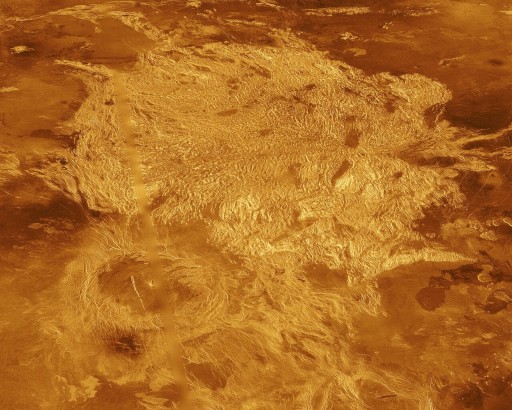
The Alpha Regio of Venus is one where younger volcanic plains embay strongly deformed tessera terrain (Bethell E. M. et al., 2019), and this is an area of particular scientific interest for radar sounding due to the several competing hypotheses for its subsurface structure. These hypotheses predict either a crust formed over a cooling magma pond, or stacked volcanic or sedimentary layers that were subsequently folded and eroded (Byrne P. K. et al., 2021).
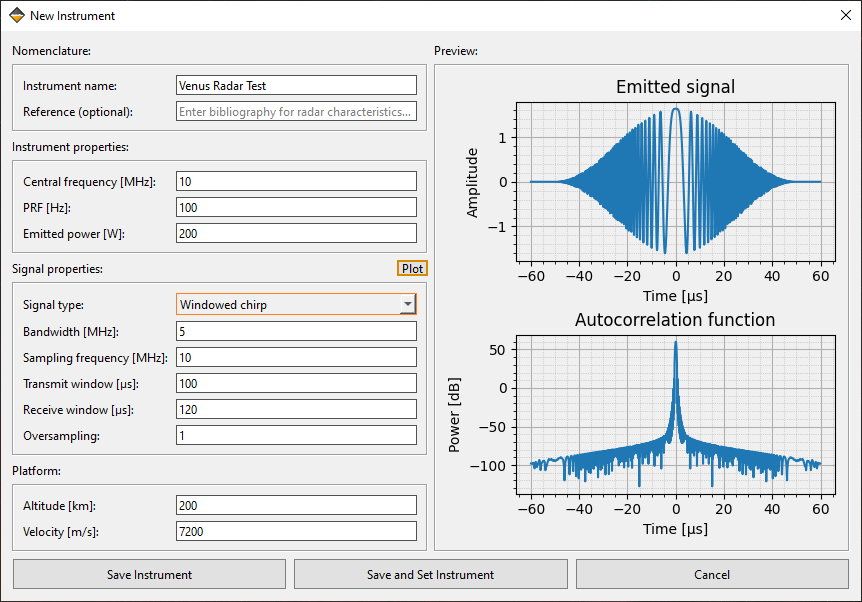
We first define the instrument for this batch of simulations. We use the instrument-creation utility, pictured on Figure 2, for this purpose. Taking inspiration from SRS, we enter a central frequency of 10 MHz, a bandwidth of 5 MHz, and a power of 200 W (Figure 2), and the rest of the parameters with sensible values. The utility generates previews the chirp and its autocorrelation. Save and Set Instrument saves an *.instr file and loads it into the project.
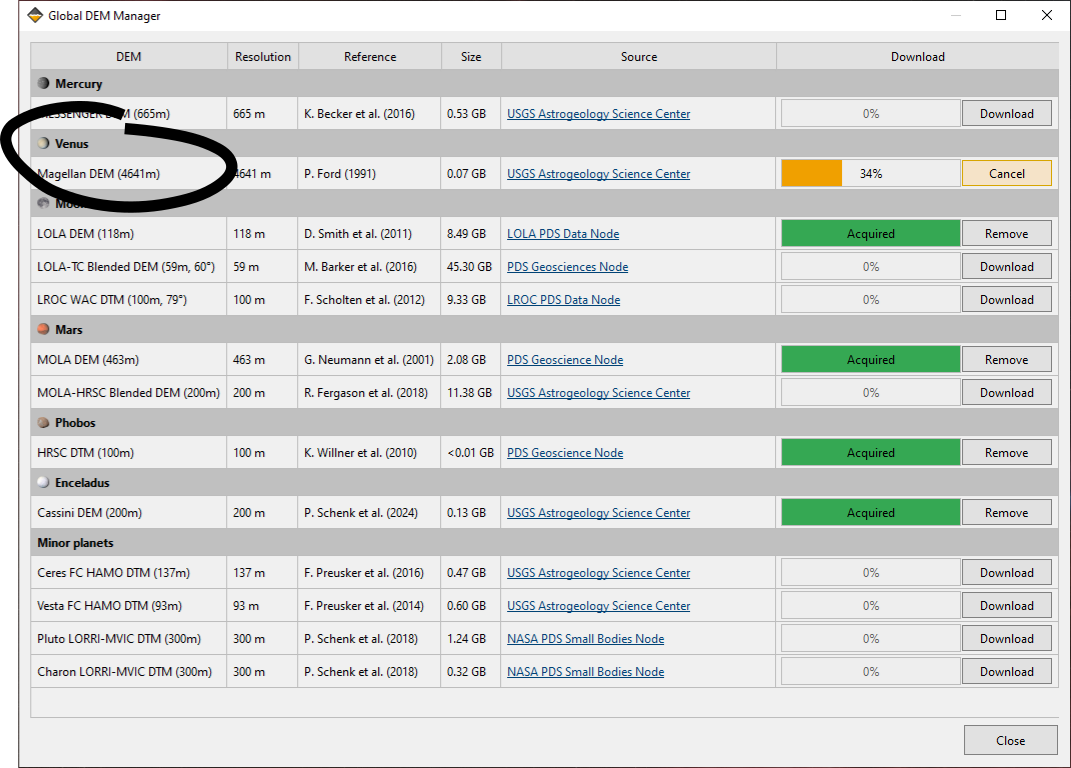
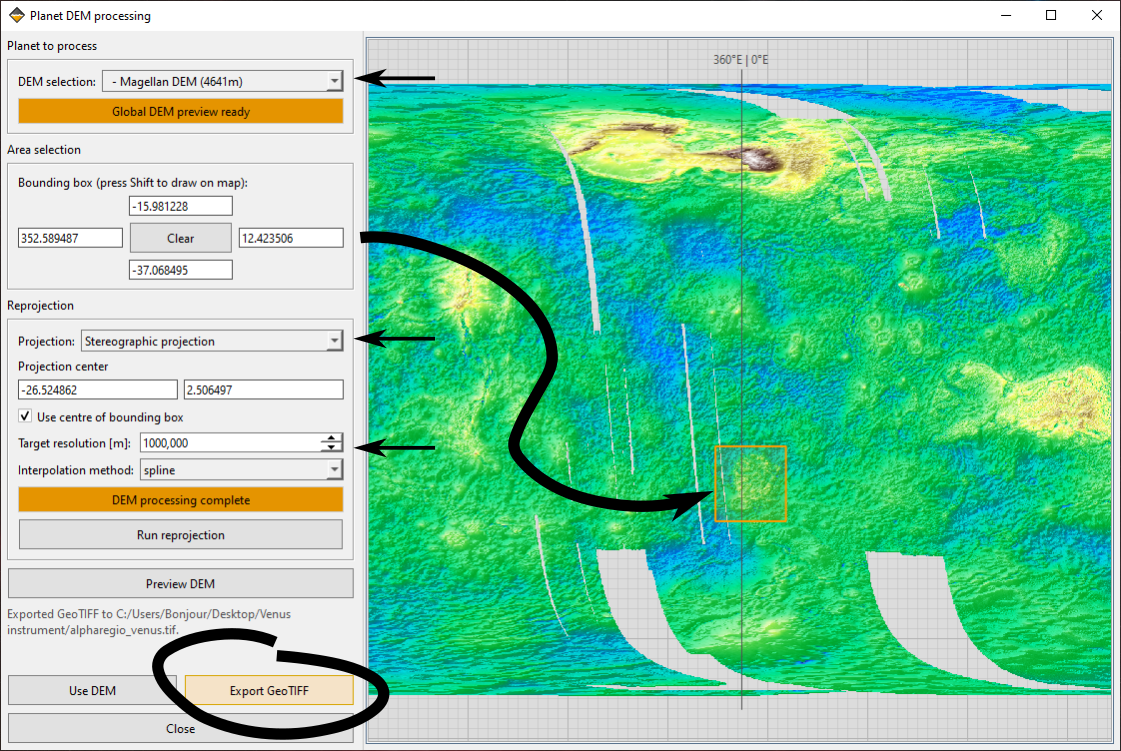
We open the planetary DEM catalogue (Figure 3a), which lists one Venus DEM. This utility allows the user to locally store/remove any of the planet-scale DEMs that are available to the scientific community. The only global DEM of Venus currently available is the Magellan DEM with a grid spacing of 4641 m created from data collected by the Magellan SAR instrument between 1990 and 1992 (Ford, P. G., 1991). After having downloaded it, we open the Planet DEM processing tool. This utility allows the user to crop and reproject any of the catalogued DEMs. We start by selecting the region of interest, the Alpha Regio of Venus by drawing a rectangle encompassing it on the map. The bounding box bounds are automatically updated. We select a stereographic projection and chose a resolution of 1000m with spline interpolation for the output product. As this Venus DEM is of notoriously poor quality, the option to export as GeoTIFF allows the user to further treat the DEM with purpose-specific algorithms. In our case we will simply load it in our simulation.
Alpha's interior ridges and troughs have spacings of 10–30 km. Finer, later fractures, graben, and ridges cross its western margin, where adjacent volcanic plains were tilted and faulted after emplacement (Gilmore M. S. and Head J. W., 2000). Smoother plains also fill depressions within the tessera (Bethell E. M. et al., 2019).
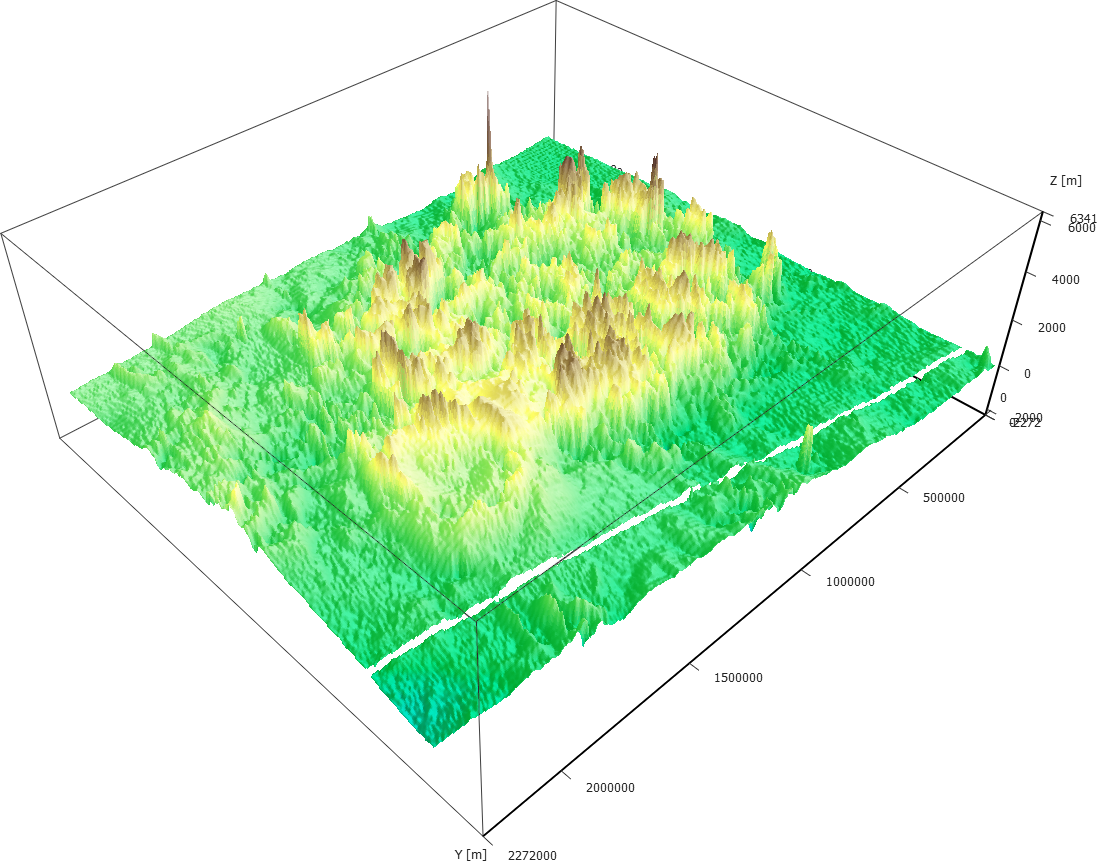
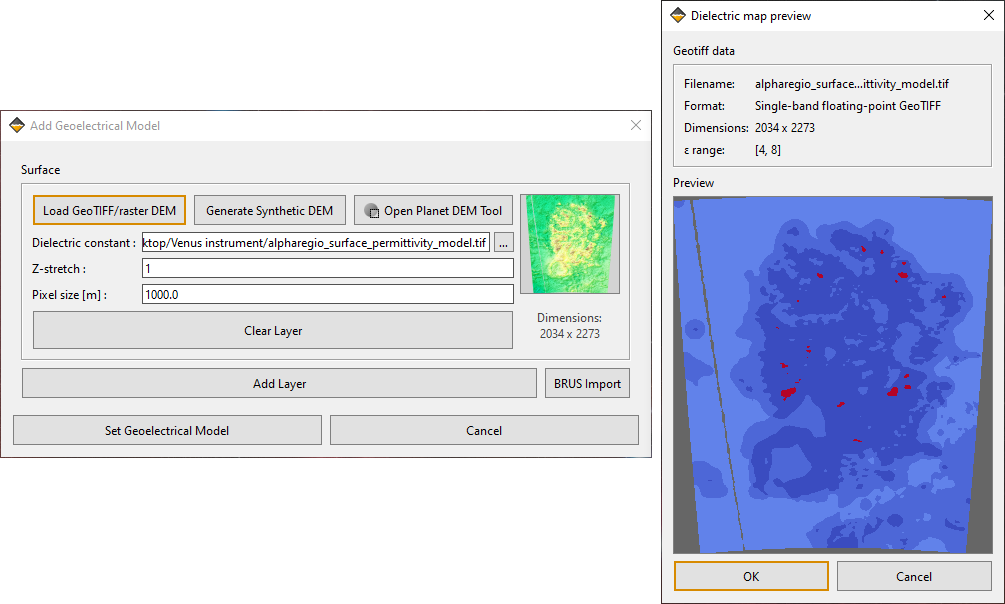
In addition to loading the DEM (Figure 4), BRUS allows the use of dielectric maps specifiying the dielectric constant for each point of the DEM. We load a purpose-drawn dielectric map of this area of Venus through the dedicated button in the geoelectrical model. This opens the map and its preview (Figure 5). The blue areas have dielectric constants between 4 and 4.5 whereas the red areas have a dielectric constant of 8, as specified by the autodetected "ε range" field. This map attemps to reproduce a reasonable assumption of a dielectric constant of 3-5 for ordinary tessera terrain with patches of anomalously high-reflectivity material (Stein & Gilmore, 2017);(Bondarenko & Kerslavsky, 2018);(Gilmore et al. 2023) for illustrative purposes.
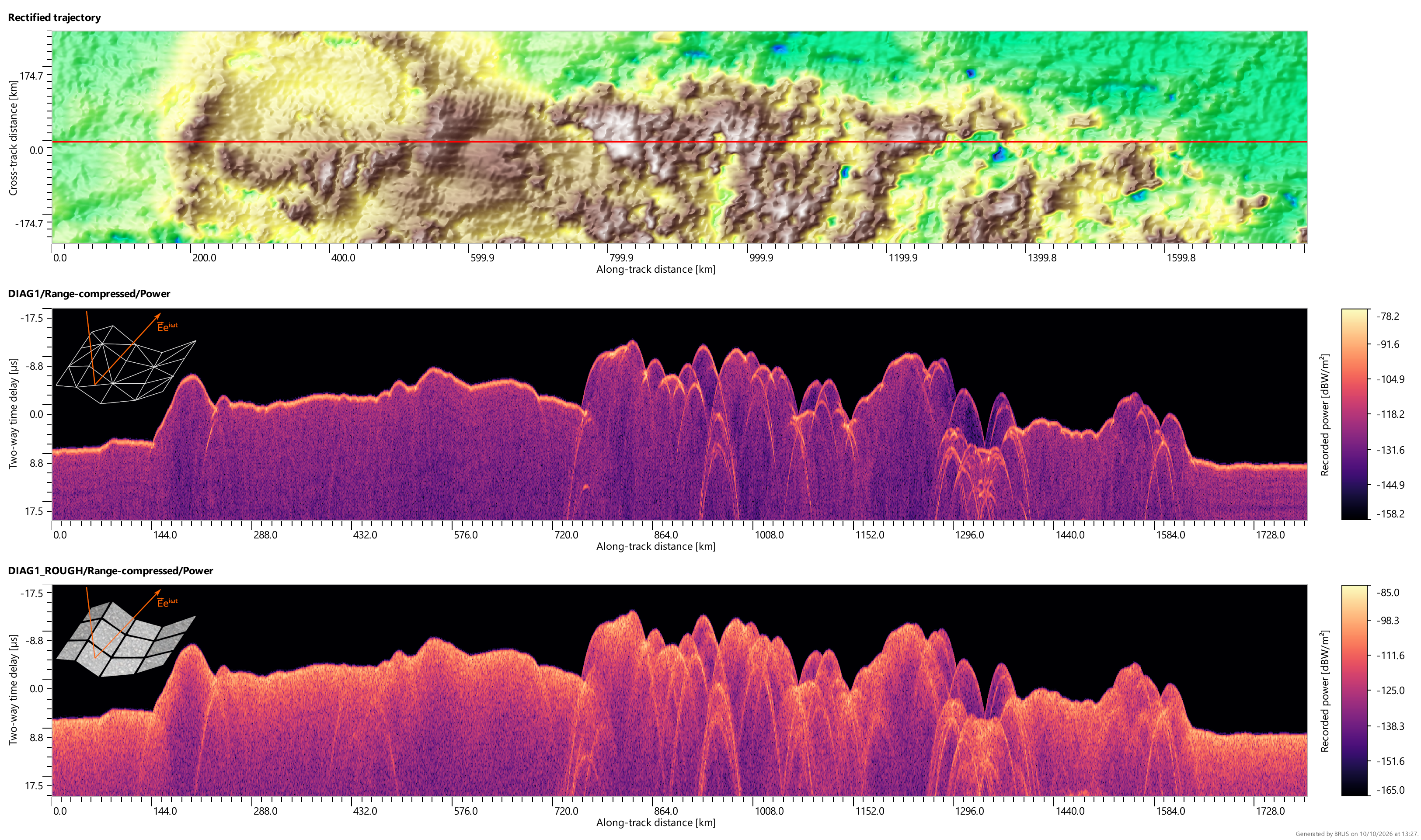
The first exploratory simulation will involve a clutter simulation using a transversal trajectory. We will compare the results using the Gerekos 2018 method and the Gerekos 2023 method for full-phase coherent-incoherent simulations using rough facets. The facet-level roughness parameters were chosen to be an RMS height of σ = 3.00 m and a correlation length of lcoh = 150.00 m. This will be particularly instructive given that the resolution of the DEM is very very low, meaning that purely coherent methods may miss out on non-negligible incoherent scattering. The result of the simulations can be seen in Figure 6, where simulations from different projects were loaded in the Viewer through BRUS' import object menu.
The classical triangular-facet simulation has an unusually clean aspect due to the very large facets, highlighting a probable deficit of diffuse clutter if it were to be used without any additional precaution. Even a modest amount of facet-level roughness restores a more natural appearance for the cluttergram. Inversion procedures can be used with this method to extract the small-scale roughness of the terrain (Gerekos C. et al., 2023).
The aperture-dependent specularity approach of Schroeder D. M. et al. (2014) separates the aperture-independent specular power from the diffuse contribution by processing the same observations with different SAR focusing apertures. Comparing these power curves with BRUS simulations over a range of roughness and permittivity values would first constrain the small-scale roughness, then associate the remaining variations in coherent reflectivity with dielectric contrast. Such an inversion procedure can be used on these BRUS radargrams to retreive the local variations of dielectric constant, providing support to future radar-geological studies of Venus.
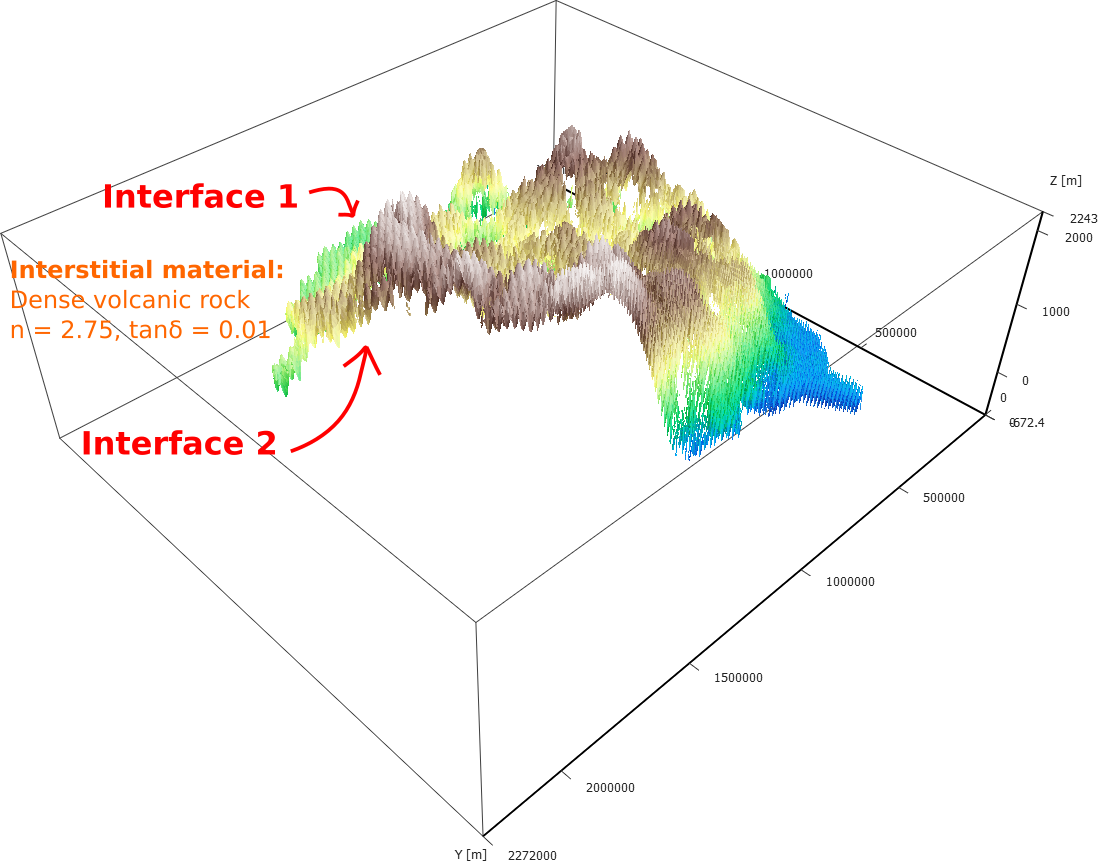
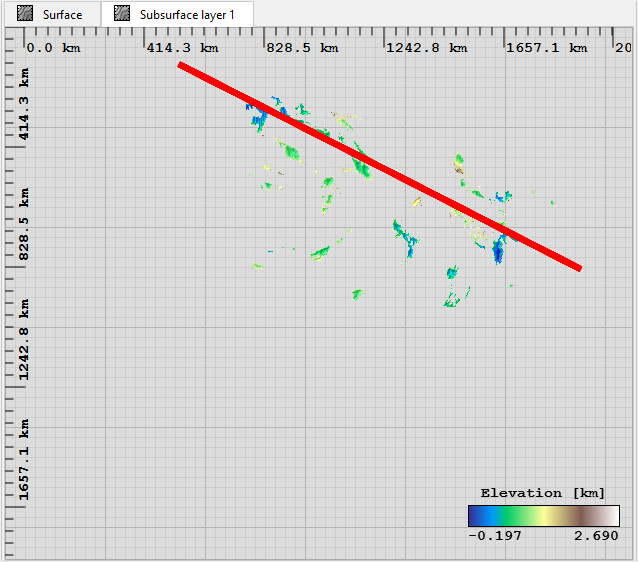
After having looked into the issue of surface roughness using a DEM representing only the surface, we propose to run simulations for a couple of hypotheses about the subsurface of Alpha Regio.
Magellan observations show that Alpha's tessera fabric records superposed broad and fine ridges, disruption zones and younger graben, while smoother volcanic plains occupy internal lows and embay its margins (deCharon A. V. et al., 1991); (Gilmore M. S. and Head J. W., 2000). Detailed mapping separates the tessera, its structural traces, and numerous plains and flow units, providing the surface contacts used to limit the models (Bethell E. M. et al., 2019). These relationships constrain where buried interfaces are plausible, but do not measure their depths or dielectric contrasts. The tested cases will be the following.
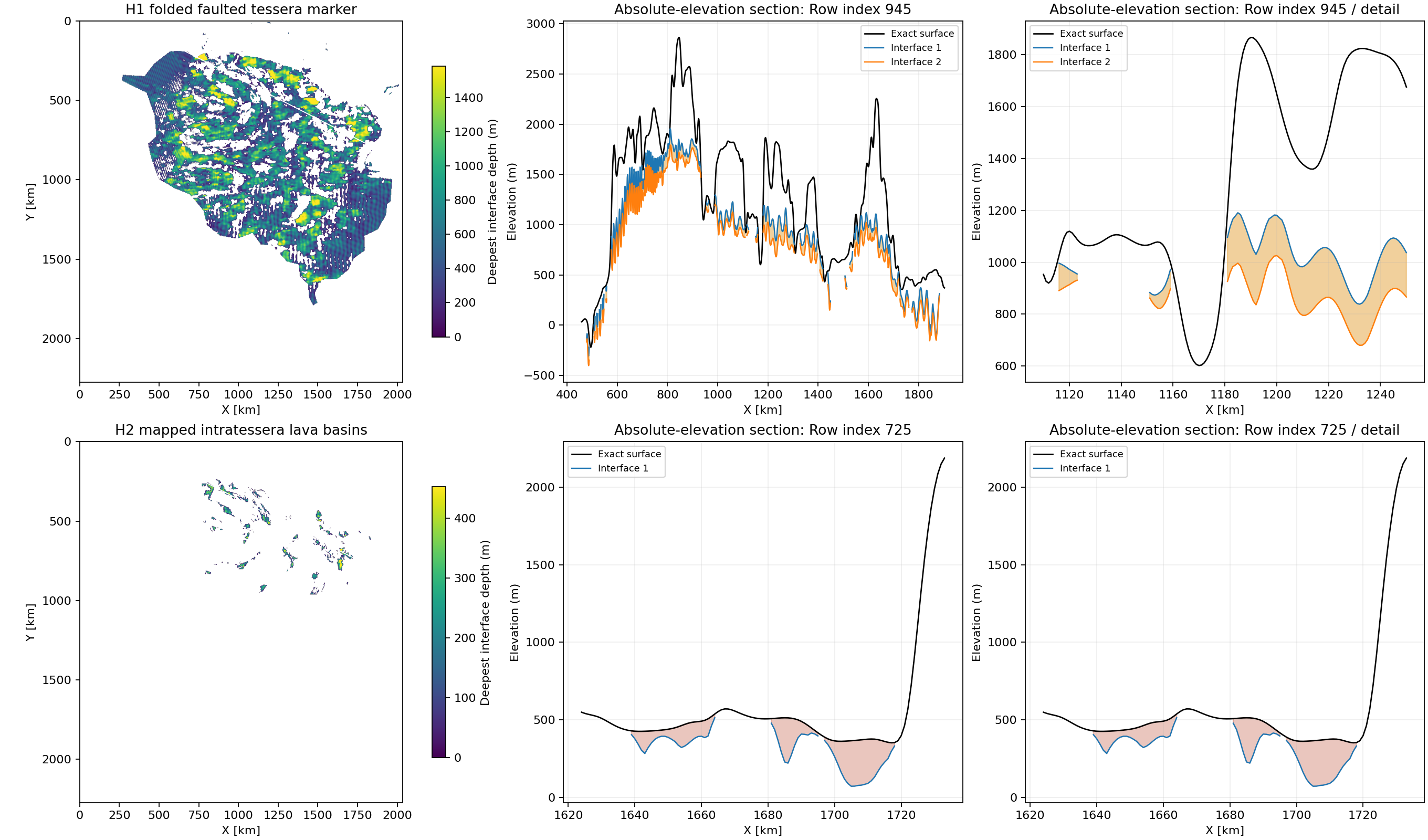
Hypothesis 1: a folded and faulted marker bed. A relatively dense bed is preserved within a more fractured tessera precursor. Two finite and discontinuous interfaces enclose it, with folds and offsets guided by the mapped ridges and extensional structures. The interfaces cross beneath the present relief instead of reproducing it, representing pre-existing stratigraphy that was deformed and only partly preserved during the tectonic history of the tessera.
Hypothesis 2: intratessera lava basins. Younger lava occupies mapped depressions within the tessera and covers an older rugged palaeofloor. Each deposit has its own lava level and an irregular basal contact that closes towards the mapped basin margins. This tests whether a comparatively smooth volcanic fill could conceal and preserve radar returns from older corrugated terrain.
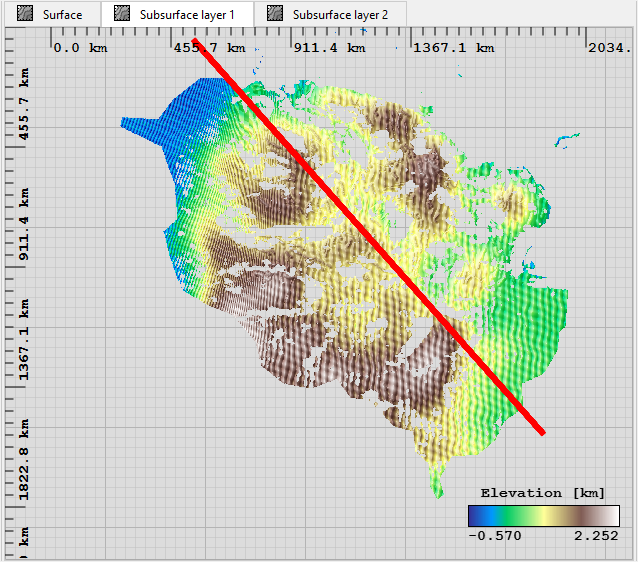
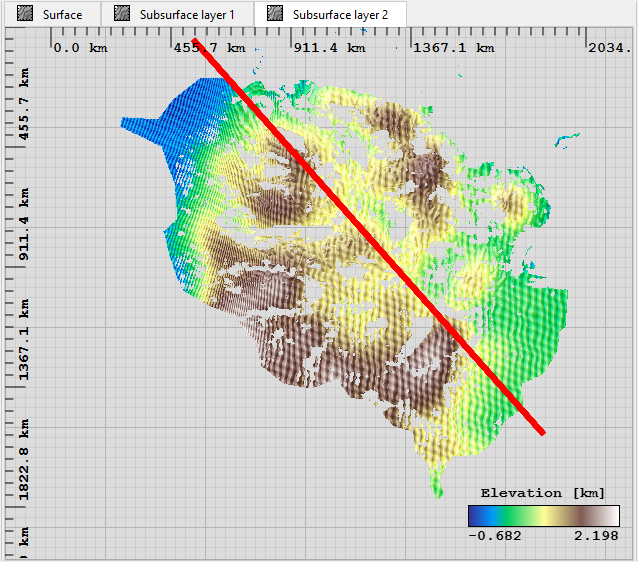
Each of these hypotheses was simulated with its own trajectory. The trajectories superimposed upon subsurface layer 1 and subsurface layer 2 of the folded and faulted marker bed can be seen in Figure 8(a) and 8(b), respectively. The layer tabs of the BRUS main window provide direct access to each interface. A 3D view of the subsurface, with both its layers, can be seen in FIgure 8(c). We remark that hypothesis 2 has a much less extensive subsurface structure than hypothesis 1, hence only subfigure (d) is dedicated to it on Figure 8; it represents the trajectory overlay in the BRUS main window.
The results of the simulations for Hypothesis 1 are shown in Figure 9, which presents zooms over the regions of interest. In each zone, the top and middle plots represent the DEM context for the surface and first subsurface layer, while the bottom plot shows the corresponding simulated radargram. The subsurface reflections are highlighted with cyan arrows. Interestingly, the highly striated part of the bassin, in subplot (c) is reflected in a train of subtle but clearly-identifiable echoes.
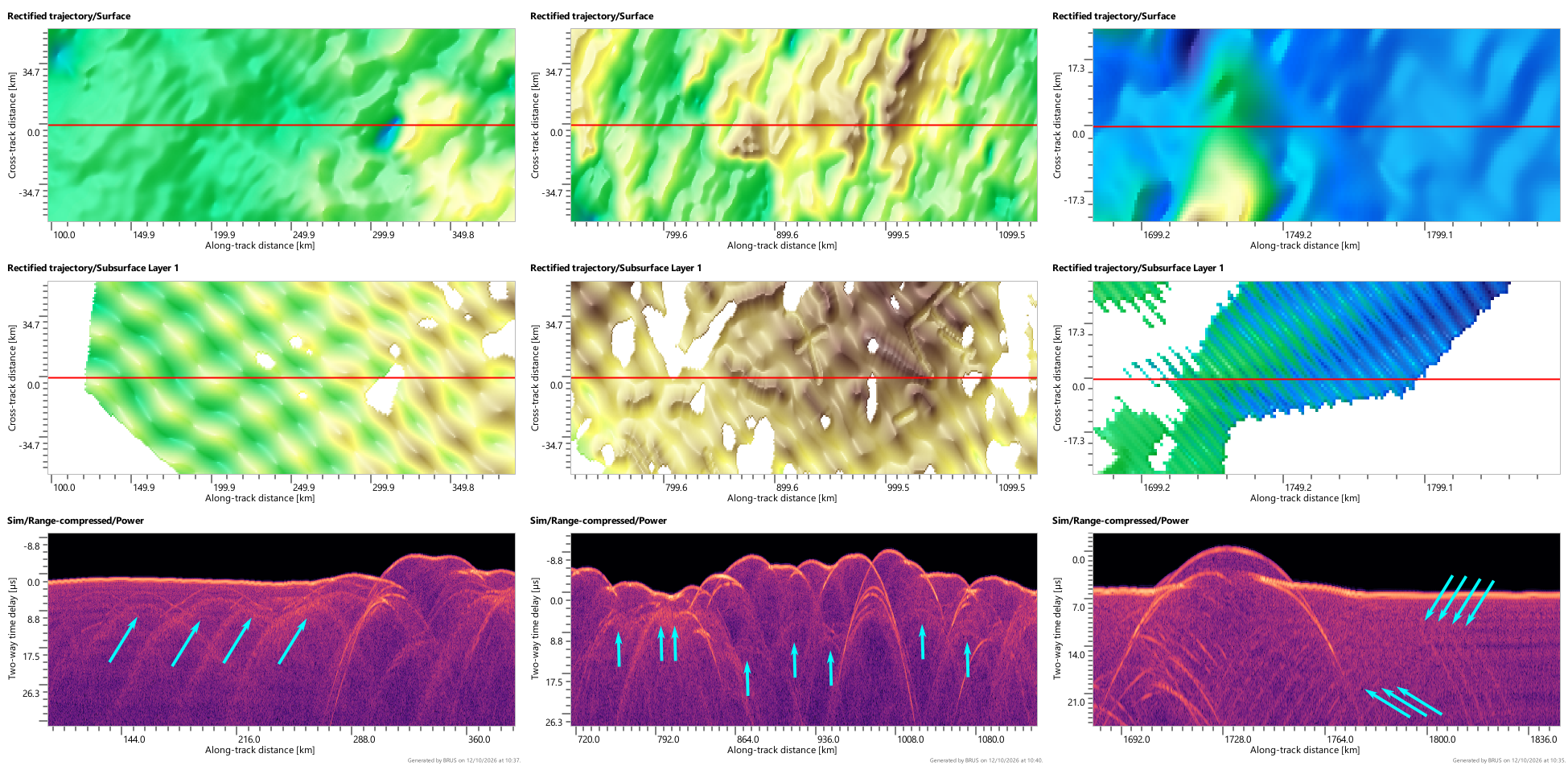
We remind the reader that simulation on a smooth coarsely-resolved DEM leads to an under-estimation of clutter, and detection might not be as straightforward as it appears, although processing can be used to enhance the signal-to-clutter ratio (not shown).
The results of the simulations for Hypothesis 2 are shown in Figure 10, which presents zooms over the regions of interest. In each zone, the top and middle plots represent the DEM context for the surface and the only subsurface layer, while the bottom plot shows the corresponding simulated radargram. In this hypothesis, the subsurface features are both much smaller and at times to the surface, making their identification more difficult. The cyan arrows point at the subsurface traces. In the first case, we identify the echo closer to the surface as the subsurface reflector, whereas in the second, the boundary could be hard to discern because of the inclination of the subsurface bassin, but its striated nature could be the source of diffuse subsurface clutter that is highlighted.
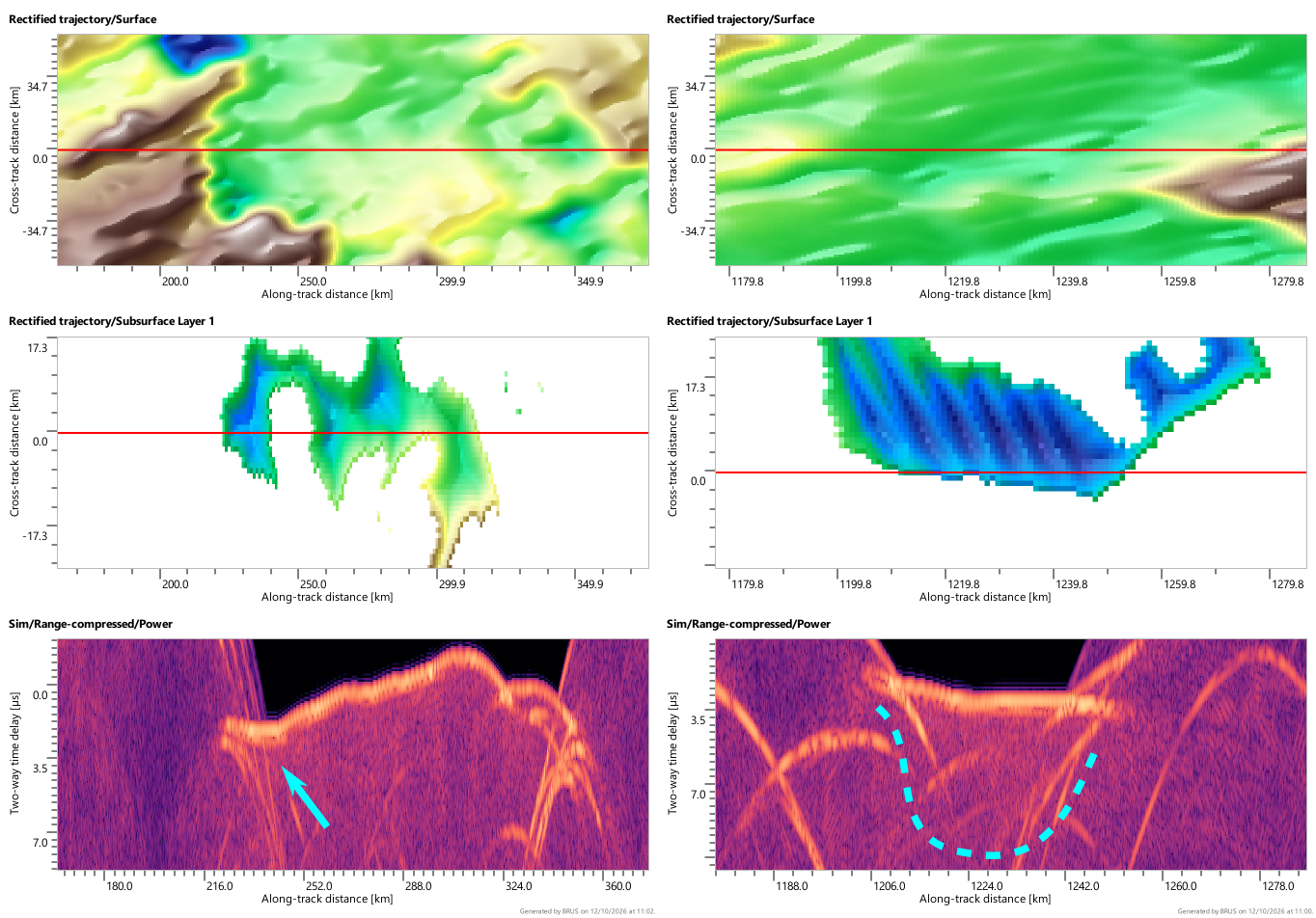
© Brabants Radars. Figures 2, 3, 4, 5, 6, 8, 9, and 10 extracted directly from BRUS.
Availability
A single one-year BRUS licence costs 2.800 EUR. Multiple licenses, multi-year licences, or even lifetime licences can be offered at highly preferential rates. Request an offer for your organisation. A live demonstration of BRUS and all its features can be given online or at your premises.
Latest release (limited) DEMO v0.3.4
| Platform | Supported version | Available build |
|---|---|---|
| Windowsx86-64 | Windows 10 or 11 | *.exe installer |
| macOSApple silicon | macOS 14 Sonoma or later | *.zip application bundle |
| Linuxx86-64 | Ubuntu 24.04 LTS or later, Debian 13, or Fedora 44 | *.deb or *.rpm packages |
| HPC | Upon request | Upon request |